Tuesday, August 10, 2010

Bali trip 2010

I visited Bali for the first time in September 2010 to go to the Ben Wilson Bali Accelerator Kitesurf Camp. You can read about my experiences on the camp on my kitesurfing blog.

This post provides some information and links to photos of my other experiences in Bali.

It has taken me 50 years to get to Bali, and I am glad I have finally visited.  Bali seems to a place you think you know all about even if you have never been there as so many Australians visit here and talk about it.

Some say they love it.  Others say they hate Kuta but the rest of the island is very good.  I was very interested to see for myself.

Arriving and early experiences

Landing at the airport, I approached customs and immigration wondering what I was in store for.   I was confronted with very long queues that took about an hour to be processed, and I was right up the end.

Once through, I looked for my transport to the hotel I have booked, but couldn't find anyone.  There was a fellow in an office who rang my hotel (the Puri Cendana), but they said I didn't have a booking.  They said to contact ABL Tours who I had booked through, but they did not answer their 24 hour number.

Not a good start.  Hot and bothered, with several guys offerning lifts.  The guy in the office helped me get a car (not a taxi as it turned out) who took me to Pur Cendana for 140,000 rp.  I figured this would be the best place to go and I might be able to talk them into giving me a room.

The car drove through the bar district of Seminyak which had people (mostly tourists) spilling out into the street with music thumping, and Balinese "lady boys" perched on motorbikes parked nearby.  What an introduction; I was getting frazzled.

The driver left me at Puri Cendana where I spoke to the attendant and settled by nerves.  He and the security  guys were friendly and helpful, as I found most Balinese to be.  The concierge found me another hotel and a taxi to take me there, and showed the taxi where it was on his scooter.  The Ari Meriki turned out to very friendly, quite convenient and not too expensive.  I booked it for my other nights in Seminyak.

The first day around Seminyak and Kuta

I woke early and went for a walk along the JL Drupadi road the Ari Meriki is on.  Some hustle and bustle starting up along the road, but most of the shops were closed.  I encountered the Bali paradox - some very neat and expensive western shops, and a small very poor street market.

I had a nice breakfast back at the hotel, then wandered in to Seminyak and walked along JL Dyhana Pura.  Again there was a mix of western bars, hotels and shops and other more local places.  I stayed out of most of the shops but settled in the Bestest Cafe for some good free wifi and some eggs for lunch.  I checked out the Sofitel on the beach after a security check to get in, and then the beach and the Hotel Pelangi where we meet tomorrow for the wave camp departure.


The beach is nice and wide, with lots of deck chairs to rent and drinks, massages and rental equipment available.  There are some good waves too.  This beach is the draw card, along with cheap prices, for the Type A Australian tourists who flock here.

I then rented a bicycle which was only just big enough for me and not in a good state of repair and cycled along the JL Raja Seminyak to Kuta.  Endless shops and people milling about.  Lots of scooters and cars too.  It was very busy, and not my idea of a relaxing holiday.  I cycled down through and around Kuta, passing ground zero for the 2002 bombings (without realising it) then back along the beach.  It is much busier both on the beach and the streets in Kuta.  Too busy for me.

I bought a mosquito net and a T shirt at the Bintang supermarket, which is full of local goods.

After a rest at the hotel I headed off to try and cycle to Sanur to check out the kitebeach there.  Lots of cycling along roads that all start to look the same, jostling with scooters on the left.  I could hear them talking about me on their scooters as they approached from behind and passed by.

I got close, but did not have a good map, so I turned before I got there as it was getting late and I wanted to avoid the dark.  I followed my nose home along a busy road.  The right crank on the bike became loose so I had to hand tighten the screw several times, as well as constantly adjust the seat.  It was great to get some exercise.  I dropped the bike back after a shower and had dinner at the Bestest Cafe - a nice safe souvlaki.

Kitesurfing at athe Ben Wilson Wave Camp


I then spent 7 days at the Ben Wilson Bali Accelerator Kitesurf Camp. You can read about my experiences on the camp on my kitesurfing blog.


A day tour to Kintimani and Sanur

Back in Seminyak after the wave camp, I decided to hire a driver and go inland to the volcano region and check out some sights along the way.  I was considering doing one of the bicycle tours that leave from the top and meander down, but I also wanted to visit Sanur.

My driver for the day was Gusti Nyoman Suamba in a Suzuki people carrier.  We stopped at one the streets where they sell and create stone carvings, which are very impressive.  We then visited the silver region, where I bought some pendants for Lena. They were not very cheap, but they were nice.


I also bought some drink coasters from a shop selling ceramics.  We bypassed Ubud, a popular town to visit in the hills, then stopped at the Ubud Rice terraces, where I was beseiged by persistant local sellers.  Gusti told by later to avoid talking to them and handling the goods they thrust at you.  I bought a couple of sarongs from an extremely persistent lady.  Every time I walked away she dropped the price, until I reallly thought I had a bargain, and they would be good to have at home.  As it turned out, I need one as a wrap at the temple later too.

The rice terraces are beautiful and there are cafes there for meals.  I bought some bananas thrust through our window as we drove off.  We then finally left the endless roadside stalls and shops and entered a more rural region where they go fruit.  Then we crested the rim of a giant crater to get a breathtaking view of two volcanoes and a giant crater lake.  This was well worth the trip.


The smaller volcano has a fairfly fresh lava flow (circa 2008) down its flank.  More sellers of postcards and paintings.  Some are mobile on scooters and pop up when you stop in the middle of nowhere.

We then visited the superb Ulun Danu Batur temple.  Gusti explained that Ganesh the elephant welcome you just inside; Hindus pay him homage during there visit.  There were various regions and shrines within, including a small shrine for Buddha.

I had my sarong to wear but had to hire a sash to tie around it, after a bit more hassling.

2010-08-09 Ulun Danu Batur Temple


The three main dieties of Brahma, Vishnu and Shiva were represented by statues.  The flower offerings are colour coded for them.  Red for Brahma (the creator) on the right, Green for Vishnu (the maintainer and preserver) in the middle, and all the colours for Shiva (the destroyer) on the left.

We then drove along the crater rim and stopped for lunch a restaurant perched on the edge with seats looking out to the superb view.  I took the buffet after they dropped the prices to 80,000 rp + tax.  It was a nice lunch, with fruit and stick rice pudding along with good tea.  I started before 12 and was glad to leave when hordes of tourists arrived.  I found Gusti with some locals and stopped for a chat and had a snake fruit - a curiously tart fruit with a skin like a snake.
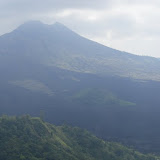

We headed down into the crater for a look.  There are market gardens growing cabbages and tomatoes down by the lake and a small village too.  We stopped at a small Warung (local bar / cafe).  I walked up onto the lava flow for a lovely panorama looking up the the Mt Batur volcano, then had a good Bali coffee at the Warong.

We continued on to the hot springs, but I balked at 150,000 rp to enter the resort.  I walked down the lake and saw some locals in canoes fishing along with fish farms.  I walked around the resort complex and found a neat local hot spring bath where they said I could bathe for a donation, but I was happy to just keep walking.  The lake is lovely, but there is garbage in it, and one guy was washing some clothes in it with detergent.

We then drove back to the top and returned along a different road, passing some large processions of locals heading to the local temple for a ceremony.  They were dressed in marvellous finery and the women were carrying ornate food offerings on their heads.

A couple of times we passed local school children in uniform marching in unison along the road, with a guide and vehicle behind them slowing traffic.

There is much more culture, ceremony and social interaction here than we have in Australia.

Sanur


We stopped at Sanur on the way back.  The beach scene here is more relaxed then Kuta.  It was low tide to the reef was well exposed.  There are seveal very expensive hotels here.  I found the kitesurfing location to the west of Sanur beach.  There were four experienced kiters out in the harbour area enjoying the good sea breeze.   High tide would be much better for beginners here.  Its flat water only.  There are three kite schools along the foreshore.

We left just before the sunset and got back to the hotel without too much traffic.  All in all, and excellent day out.

Last day in Bali - Ulu Watu, Nusa Dua and Jimbaran Beach

I woke early and updated my blog and put some Facebook photos of Ben and Tony up.  I was packed at 10 and contemplating how to spend the day.  I decided to call Gusti again and do a tour down to Ulu Watu and Nusa Dua, then get dropped at the airport at 8:00pm.

We headed off, and stopped at the big Rip Curl shop on Sunset Way.  The prices were similar or more expensive than Australia, and they didn't like me taking a photo.

We drove on to Ulu Watu where I walked around the temple.  Gusti warned me to be very careful about the monkeys and not wear my hat or sunglasses.  There were a lot of them about, and some were quite playlful.  The views from the cliffs along the coast are superb.  A large surf was roaring in, and this area is not developed much.  Gusti said water is a problem up in the hills and it has to be trucked in.

2010-08-10 Ulu Watu, Nusa Dua and Jimbaran Beach

The temple is not a big one and is in a state of some disrepair.  Tourists are not allowed into the worship areas which is fair enough.

The monkeys managed to pinch a few tourist's hats and other gear, but only the ones who chose to play with them for a good photo.  I kept my distance.  Their sharp teeth and the potential for rabies is a big deterrent.

We then went to Ulu Watu, which is a surfing mecca.  Descending the foot path from the road head brings you into a world of Warungs and small shops tucked in contours of the steep drop to the water.  Surfers hang out to rest and eat, and some store there gear in racks in the roofs.  I had a great Nasi Goreng at the Surfer Warung.  Photographers are perched at good vantage points with massive lenses shooting surfers in the waves.


The break follows a reef and a largish swell was coming in.  Wave selection seems to be crucial. Many go unridden, and many attempted takes offs are not successful.  Good riders where getting in the pocket and even tubes, and getting a long ride.

A path leads down step steps through a chasm to a grotto which opens onto the flat reef which is not too sharp.  It is a very scenic spot with the combination of limestone cliffs, water and waves.

Gusti then took me to Padang Padang, where a Rip Curl surfing tournament is "on hold waiting for the waves".  A big swell is needed to get good waves at this location.  There is more of a beach than the tiny cove at Ulluwatu.  There were a lot of Europeans here; French, Italians and some Americans here, but very few Australians.

Gusti then drove toward Nusa Dua.  There was a steep climb to a plateau which we traversed in very light traffic to Nusa Dua.  At Nusa Dua, vehicles enter a secure zone though police inspection points.  Once through the road follows a neat and very tidy and well planted green zone which traverses the entrances to numerous 5 star hotels.  There were no Warungs or pedestrians about.  This was where the United Nations Convention on Climate Change was held in 2007.  It is a world apart from the Balinese.  Tourists here probably stay at their hotels and do tours out from them; many wouldn't mix with the locals.  It seems the U.N. buys into this paradigm too.

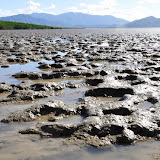
We drove through to a beach further north.  The area resembles Sanur, with a similar reef system out from the shore.  Low water sees all the boats resting on the sand and the water activities cease.  A good strong wind was blowing most of the day, but no kitesurfing was happening.  The locals were flying their ubiquitious cheap kites made from bamboo and garbarge bags.

I got a text from Jestar advising the flight would be delayed four hours which was not good news.

We then drove back towards the airport and stopped at Jimbaran beach where several local seafood restaurants spill out along the beach.  There is a public section of the beach that was being enjoyed by many Balinese, and not very many tourists.  I went for a swim in the small surf and caught a few waves.  While in the water a turtle surface a short distance out, it had massive head so it looked like a seal to me, I didn;t see its shell. It looked around then dived.

After the swim we had Chicken Nasi Goreng for dinner at a nice Warung, and I had a banana pancake for desert. Some locals held a ceremony with bells on the road.  Gusti said they were looking after the soul of a relative who had probably died there recently.

We then drove to the airport where I said goodbye to Gusti and headed through customs.  No problems with the kitesurfing bag (22.3kg), then through paying the 150,000 irp departure tax.  Jetstar gave us a free feed that was a bit average.  There are lots of shops in the airport full of souvenirs, but none of them were cheap.  I got some time to write up my trip and also some content for the kitesurfing handbook I am writing.

We got on the plane at 4:00am and had a good flight home, back to a cold wet winter in Melbourne.

Some general observations about Bali

There are of big global brands adverstised on TV

Low income Balinese can earn as little as 1,000,000 irp per month.  A beer in the Rooftop bar of the Anananta Hotel costs 50,000 irp, while a beer in a Warong costs 15,000

Kuta has been transformed by tourists into a not so pleasant place.

The surfing breaks are good, but getting to them in not easy.  A lot of survers use scooters with a board cradle, but one prang could ruin your holiday or even your life.  The best bet would be to hire a car and driver.

The official taxis are quite cheap compared to the cars that offer lifts then haggle over the price.  For example, the same trip cost me 7,000 irp in a taxi and 30,000 irp in a car.

Health is definately a concern.  Caution is required to avoid Bali Belly and even Dengue Fever.

Arriving late at night is a hassle if you don't have confirmed bookings with a hotel.

Getting out of Kuta (and staying in Seminyak or Sanur) is good to do.

Map of some locations visited


View Bali trip 2010 in a larger map

Tuesday, July 27, 2010

Melbourne's train meltdown

Melbourne suffered a extreme outage today.  Nearly every train line was affected when a train's pentagraph (the bit that connects to the overhead wires) got snagged and brought down the line, causing a power outage that basically shut down Southern Cross station, then the entire rail network.


Dozens of trains were cancelled on all lines for over 2 hours.  Over 400,000 commuters were delayed on their way to work and across the rail network.  The cost to the economy has been estimated at $12 million dollars.

Martin Pakula, the state transport minister, apologised to the public, as did Metro, the new private operator of the system.

The root cause appears to be a chronic lack of investment in basic maintenance, including:

  • many old trains
  • wooden sleepers still abound, many of which are decades old
  • signals and associated cable conduits
  • the power wire system
There is obviously also no redundancy in the power system - what we saw today was a single point of failure.

The funding allocated to maintenance of Melbourne's rail system is a tiny proportion of that allocated to roads, yet every day in Melbourne the rail system moves more people to and from the CBD.  

As I have mentioned previously, no new suburban train line has been built in Melbourne since the Glen Waverley line in 1930.  Since that time Melbourne's population has increased from 1 million to over 4 million.

The privatised system is clearly a failure.  The government blames the operator (Metro) for "delivering poor service" and Metro (and previously Connex) blames the government for not investing enough in upgrading rail infrastructure.  Nobody is actually accountable any more, which is just not good enough.

As compensation, the Metro operators and the State Goverment will let people travel for free on Friday and share the $1m loss of revenue.

Here is what we need to do:
  • Allocate $2b per annum to upgrade existing rail infrastructure
  • Build new rail lines to suburbs that have no rail, including the Rowville and Doncaster lines.
  • Plan a metro circle system for inner Melbourne that connects Parkville, Brunswick, Fitzroy, Richmond, South Yarra, South Melbourne and North Melbourne.
  • Return the system to public management with clear accountability for service delivery.
  • Spend no more money on the Myki card - and ditch it doesn't work.  The system really only benefits private operators - for whom it has been designed to provide revenue.  It is too complicated and the stupid "touch off" requirement impedes users greatly.
  • Stop building ridiculous "roads to nowhere" projects such as Westlink and the Frankston Bypass
The total cost of $15m would have been much better spent on prevention and proper maintenance.

External links

Tuesday, June 29, 2010

Wong plays more politics with climate change - all talk and no action

The Labor party is back in election mode and restarting their campaign after the campaign started by Kevin Rudd turned to custard.  Having deposed Rudd as Prime Minister and shut him out of the new Cabinet, Julia Gillard has rewarded those loyal to her by keeping them in their ministries - despite quite obvious failures for a few of them to deliver.

Penny Wong for example failed to deliver an emissions trading scheme.  The accountability for the failed CPRS was hers, not Kevin Rudd's.  Instead of architecting an ETS based on science and evidence based reduction targets, Wong set about "negotiating" with the fossil fuel industries and running a political wedge within the Coalition ranks.  At no time in this process did she (or anybody else from Labor) negotiate with the Greens, who publicly committed to a science-based emission reduction target of 40% by 2020.

Wong "browned down" Labor's CPRS by gifting billions of free carbon emission permits to polluters and even doling out free cash payments to coal-fired power stations out of the public purse.  Then she negotiated with the Coalition and further "browned it down" so that if implemented, Australia would have achieved no emission reductions by 2020 and bought dodgy "offsets" from overseas.

Then the skillfully crafted wedge against the Liberals failed - Turnbull was ousted, and the new opposition leader sidestepped the trap set and opposed the CPRS - as it turns out for the wrong reasons, but for the right outcome.

Penny Wong had no "plan B" despite an offer from the Greens to negotiate on an interim carbon tax as described the Government's own advisor on climate change and economics - Professor Ross Garnaut.  Kevin Rudd then took the rap for the CPRS failure and said he would do nothing until 2013.  This was the beginning of the end of his time as Prime Minister of Australia, even though it was Penny Wong's failure.

I waited keenly for Julia Gillard, as the new Prime Minister, to say what she was going to do on climate change.  She acknowledged that action is required and that climate change is serious, but said that "we need to reach consensus on a price on carbon within the Australian community".  This is code for doing nothing.  

There will be no consensus when the fossil fuel industries spends hundreds of millions of dollars on propaganda and funding climate denialist groups, as we saw happening in the lead up to and during the recent failed Copenhagen Accord.  So Gillard stands for yet more talk and no real action.

Has Penny Wong learnt from her recent dismal failure with the CPRS?  Apparently not.  She is attending a 
Climate Adaptation Futures Conference at the Gold Coast along with over 100 climate scientists from around the world.  They are talking about how to adapt to climate change, not whether it is happening or not - which is now regarded as a given by climate scientists.  Unfortunately, this is cure rather prevention.  

Penny Wong told the Conference that:

"it was important to remember that science was at the heart of understanding climate change"

So how does she explain ignoring recent climate science and setting only a 5% reduction target under the CPRS?

"For too long those who deny climate change is real have muddied the debate, for too long they have hijacked this issue to pursue their own agenda."
I agree with her on this - but is Penny Wong who has hijacked the issue for petty political reasons.

"The reason we don't have a price on carbon is Tony Abbott tore down a leader (Malcolm Turnbull) and installed himself on the basis that he doesn't believe climate change is real, and the Australian Greens voted with Mr Abbott."
Some classic blame shifting here Penny.  As previously noted, she did not negotiate with Greens on the ETS at all, or after it failed!

"Julia Gillard has made clear her commitment to this issue, and her views about the need for a price on carbon" 
Penny Wong and Julia Gillard can achieve this tomorrow by negotiating with the Greens senators and getting two Liberal Senators to cross the floor.

It is time for Penny Wong to stop playing politics and to stop making excuses for doing nothing.  We need a carbon tax and we need it now.  Get on with it.

Thursday, June 24, 2010

An open letter to Julia Gillard PM - please take action on climate change

Subject: Congratulations on becoming Prime Minister - please take action on climate change and forest protection

To: Julia Gillard MP

Dear Julia,

Congratulations on becoming Prime Minister.  I think you will do a great job.  I was extremely disappointed when Kevin Rudd abandoned any effective action on climate change.

Here are some items I suggest you consider, with urgency:

  • Negotiate with Greens and at least two Coalition Senators in the Senate to get a carbon tax in place - this would apply across all industries, not just mining, and the funds can be directed towards transitioning to a low carbon economy
  • Remove perverse taxes that encourage fossil fuel use - such as car leases that require minimum kilometres to be driven, the diesel fuel rebate, and sundry others

    • Allow tax deductions and/or salary packing for people who cycle to work
    • Ditch the $2billion+ corporate welfare funding for "Clean Coal" geo-sequestration pipe dreams that defy the basic laws of physics and direct this towards a 100% clean energy program based on concentrated solar with salt storage and wind power.
    • Commence planning for a very fast train project to link Adelaide, Melbourne, Canberra, Sydney and Brisbane.
    • Introduce national building standards for 6 Star Rated buildings and retrofit of existing building stock (and keep Peter Garrett away from it)
    • Protect native forests from logging to keep the carbon they store where it is, secure our water supplies and provide habitat for endangered species. 
    • Do not allow the burning of native forest woodchips as a "renewable energy source" - it clearly is not renewable and our forests are worth much more than woodchips.
    • Commence an initiative to transition Australia to net zero emissions by 2020 - as outline in the Zero Carbon Australia 2020 Stationary Energy Plan produced by Beyond Zero Emissions
    I believe you have an excellent opportunity to lead Australia towards a vibrant zero carbon emissions economy that is sustainable, with our national heritage and environment protected.

    Regards, Peter Campbell
    Home address supplied

    Tuesday, June 15, 2010

    Why can't Rudd do a carbon tax?

    With the Federal election likely to be called this year, probably in August, the Rudd Labor government is now in campaign mode.  Consequently, its policies and focus are directed toward positioning themselves for winning the election and not much else.

    The campaign strategy discussions may have unfolded something like this:

    What will be our core platform for the election?
    • Let's do health, education, economic responsibility and the national broadband network
    • We will lob a new health funding model on the States and bully them into submission  so we appear tough and forceful
    • We can trade off avoiding the Global Financial Crisis claiming we saved Australia from financial ruin
    What will be our main issues to defend for the election?
    • We completely flubbed it on climate change when Copenhagen turned to custard, and we had no plan B - so lets keep blaming the Greens for not supporting the industry-friendly CPRS - and the Liberals for sidestepping our skillfully crafted wedge when Turnbull went under and Abbot took over
    • We aren't doing too well on environment either, with native forests still being destroyed, the Great Barrier Reef dying, the Orange Bellied Parrot and a few other species rapidly heading towards extinction - so lets get Peter Garrett out there handing out money for a few good causes in the States. 
    • The housing insulation scheme killed for people and turned it a fatal farce.  Can't remember why we gave this to the Environment Minister Garrett when he and his department know nothing about building matters or managing large scale projects. So let's take it off him and give him a bit more money to throw around.  And send him to the back bench after the next election.
    • Clear the decks.  We have a few backflips to get out of the way.
    • Backflip 1  (Kevin Rudd) - the need for urgent action on climate change "the great moral challenge of our time" - the CPRS (emissions trading) now on hold until 2013
    • Backflip 2 (Wayne Swan and Kevin Rudd) - avoid scrutiny of Government advertising by the Auditor General by announcing a $38 million, taxpayer funded political advertising campaign., despite it being “a cancer on our democracy” and a clear commitment from Rudd that this would not happen., 
    Then some polls were released indicating that Kevin Rudd had burnt most of his political capital in a very short space of time and his support plummeted, with opposition leader Tony Abbott seemingly now capable of winning the next election.

    Let's run a scare campaign on Abbott - like Howard did on L Plates Latham.  Let's even compare Abbott to Latham.  Brief to all ministers - keep saying "Tony Abbott would win an election if one were held tomorrow".

    Now we need to get back onto our core platform.  

    We have an exposure on the economy - we are now seriously in debt with a large deficit.  Lets cherry pick from the Henry Tax Review something that will help us back on track to a budget surplus.  Let's go with the Resource Super Profits Tax - will lob it out there and have some biffo with the mining companies.  This will give Kevin Rudd another opportunity to demonstrate his strong leadership style, and will offset some of the fallout from gifting $8 billion via the failed CPRS to large corporations making millions out of fossil fuels.

    Well, that worked, sort of.  We got the media off climate change and even backflips, but those mining companies sure have gone troppo.  Now a bit of a stoush and ritual combat is turning into another problem for us - no consultation with stakeholders (like health reform), and back benchers in marginal seats with mines getting restless.  Let's hang tough for another couple of weeks then reduce the RSPT rate a bit to shut them up.

    *** End of script as at 15 June 2010 ***

    This reads a bit like a script from the Hollowmen.  But then truth is stranger than fiction.

    Here are a few things that should have happened:
    • Negotiate with Greens and two Coalition Senators in the Senate to get a carbon tax in place - this would apply across all industries, not just mining, and the funds can be directed towards transitioning to a low carbon economy
    • Remove perverse taxes that encourage fossil fuel use - such as car leases that require minimum kilometres to be driven, the diesel fuel rebate, and sundry others
    • Allow tax deductions and/or salary packing for people who cycle to work
    • Ditch the $2billion+ corporate welfare funding for "Clean Coal" /geo-sequestration pipe dreams that defy the basic laws of physics and direct this towards a 100% clean energy program based on concentrated solar with salt storage and wind power.
    • Commence a very fast train project to link Adelaide, Melbourne, Canberra, Sydney and Brisbane.
    • Introduce national building standards for 6 Star Rated buildings and retrofit of existing building stock (and keep Peter Garrett away from it)
    • Protect native forests from logging to keep the carbon they store where it is, secure our water supplies and provide habitat for endangered species.
    I am not holding my breath for any of this.  But I am astounded by the failings of our political system and our major party politicians to deliver sensible policies.

    They are intent of just playing politics, striving to get into government, then just pfaffing around when they get there.

    *** Script update at 15 June 2010 ***


    Prime Minister Kevin Rudd appeared on the 7:30 Report on Monday night.  He appeared to be in damage control mode forcing some smiles, rapidly blinking and appeared uneasy.  When questioned about the Resource Super Profits Tax, the mining industry campaign against it and the date of the next election he mentioned that the election could be delayed until March/April 2011.  

    "Yeah, well we have an election due by whatever it is, March or April next year and we only have three year terms. You've got to use the time effectively. "

    So it seems that the nascent election campaign in progress may be drastically rescheduled.  Then again he may go early to avoid Tony Abbott gaining more support.  

    I wish he would just bring a carbon tax and get on with it.


    External links


    Monday, June 14, 2010

    Port Douglas trip 2010

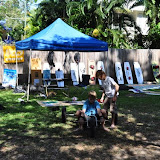
    Winter in Melbourne means very little reliable wind for kitesurfing, wet weather and cold temperatures.  We decided to have another family holiday this year in Port Douglas, and I would stay another week for kitesurfing.

    However, this trip there was no wind most of the time which was dissappointing given a major reason for this trip was to go kitesurfing. I was lucky to get in a couple of good sessions however in the warm tropical water.

    There are very few Japanese and other tourists about compared to my visits in previous years. A lot of the hotel chains had 10% occupancy rates, and many private apartments and villas have been empty for extended periods.


    A 3 month lease can be negiotated for 2 bedroom villas for around $200 to $250 per week. Daily rentals of around $90 per day are commonplace. A lot of real estate is for sale. It seems that appeciation is low or non-existent. It doesn't look like real estate is a good investment in this region for either rental return or capital gains. However, it could a low point and therefore a good time to invest, but only if tourism increases and the market moves ahead.

    This shows the perils inherent in basin and economy on tourism. Cairns and Far North Queensland have 15% unemployment at the moment.
    There are also some bogans around in Far North Queensland. Someone set fire to rubbish in a plastic bin at the 4 Mile Beach reserve and left it burning on top of a wooden picnic table. The result was a burnt table covered with litter and melted plastic - a terrible mess.

    The Captain Cook highway which hugs the coast between Cairns and Port Douglas is superb.  It has ocean views similar to Victoria's Great Ocean Road and many nice beaches along it.  It is a great road for cycling if you time it when there are few cars - such as early on Sunday morning.


    We visited Hartley's Crocodile Farm and were surprised by the range of animals there - including Cassowaries, Jabiru, a Spotted Quoll and of course some huge crocodiles.  It is well worth a visit.

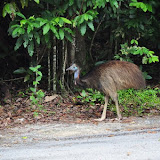
    Mosman Gorge is always a favourite.  The fresh flowing water and the rainforest is superb.  On this trip Chloe said "look daddy, a big bird!" and a wild Cassowary walked out of the forests into the carpark - the first I have ever seen in the wild.

    We swam in the sea a few times in the stinger nets.  They are usually taken down by May but a lifeguard told me that a stinger was found at Mission Beach a couple of weeks ago, so they kept nets in place for another few weeks as a precaution.  Lots of people have been kitesurfing around Port Douglas an encountered no problems.

    We did a day tour to the spectacular Barron River Gorge and visited Kuranda, which is now a major tourist trap.  Lots of souvenir and "local produce shops", some of which are interesting, and the locally grown coffee is good, but it gets a bit overwhelming.

    No trace of these further inland at Mareeba - and old style Queensland town.  The Penninsula Development Road that runs inland through Mareeba and north to Cooktown is remote and isolated.  We drove to Mount Molloy then returned to Port Douglas.

    Cycling highlights

    The cycling was superb as usual. Bike rides up "the hill" on the climb to Julatten are great for training and appreciating the rainforest. There are cassowaries in this forest but I haven't ever seen one on this road. A circuit ride along the Euluma Creek Road was a highlight. Views to the surrounding high peaks such as Black Mountain are spectacular. The area around Julatten is cooler due to its altitude and has lush farm land and a small but active local community. Lots of people around Julatten own big dogs here that are used for pig hunting.

    I rode a short detour along Side Road near Julatten and saw a small toothy marsupial road kill. When the road turned to dirt I followed it over a small creek and came across a jungle bush dwelling that was rough and ready. There are some alternative lifestylers tucked around this area too.


    In general, drivers treat cyclists with respect in this region. Usually they gave me a wide berth and a few waved hello as they passed.

    Mount Molloy seems to be in decline despite its location on the main road from Mareeba to Cooktown. There is a new real estate subdivision selling there but the bakery has closed. Now there is just a cafe and a roadhouse.

    The ride to Cape Tribulation is superb.  It is a long day - about 160km - but the rainforest, hills and creeks on the road to Cape Tribulation are wonderful to cycle through.


    Quaid Road - an exercise on folly. It was built as a private road by Quaid (local real estate agent) in cahoots with Russ Hinze and Joh Bjelke Peterson (Premier at the time). The intention was to provide fast access from the Cairns airport to a real estate development at Quaids Lake inland. The road climbs up steeply from Wangetti through rainforest. Several landslides have occurred in this region so it is in poor condition. At the top, the road traverses a high plateau and pine plantation and is covered by much leaf litter.

    A locked gate is encountered just before it is crossed by a track that connects Julatten and Kuranda. From here the road passes through very deep cuttings and across some long high filled sections. It descends, climbs to a second high point, then descends again and climbs to a third high point. It is in quite good condition along these sections. after the third big descent a smaller climb brings you the final locked gate, which f4WDs have a track around, From here it is open to general traffic. A dirt track to quarry joins it. The road then connects to the Mareeba - Mount Molloy road just near Quaid lake.

    It would have been very expensive to build and no sits as a monument to stupidity and avarice. There are very few houses at Quaids lake and nothing else around, The Queensland government still refuses to gazette and maintain it as a public road.

    Kitesurfing
    The wind this year was lacking. I got only two good sessions in this trip as bad weather in the south of Australia caused storms in southern Queensland and blocked the seasonal trade winds coming up to Port Douglas and Cairns.

    It is hard to get the timing right for wind.  The week before we arrived was very windy.  

    My blog  log entries for the kiteboarding:
    Photos

    2010-05-16 Port Douglas flight up

    Looking out to Hinchinbrook Island and coming into Cairns.

    2010-05-16 Yarrabah

    We did a side trip to Yarrabah, and Aboriginal Community south of Cairns.  It is a nice drive to get there and a there is a very steep hill to climb over.  Bike road races are held on the Yarrabah Road, but not up the hill.

    2010-05-17 Macrossan St and 4 mile

    Macrossan Street is always worth a wander.  Beach gear, restaurants and cafes.  Chloe is wearing a dress from Something Tropical for Kids, which our friends Doug and Wendy manage.

    2010-05-18 Hartleys crocodile farm

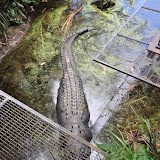
    That is a five meter Saltwater Crocodile under the decking of the cafe at Hartleys.  There are lots of other animals to see too, and the reserve is well kept.  The staff are friendly and helpful.

    2010-05-19 Kuranda and Barrons Gorge
    A view from the Captain Cook Highway on the road back to Cairns.  We then drove to Kuranda and Barron Gorge.


    2010-05-19 Mareeba
    Mareeba is an old style Queensland town.

    2010-05-20 Dinner at Tin Shed

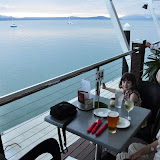
    The Tin Shed is a great place for dinner.  The views across to Thorntons Peak and the Daintree are superb and prawn shells tossed off the balcony are snatched by hungry fish.

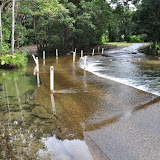
    2010-05-20 Shannons Lane ford

    A lovely ford river crossing near where fruit wines are made.

    2010-05-20 Mosman Gorge

    The wild cassowary spotted by Chloe at Mosman Gorge.

    2010-05-20 Mosman

    Mosman is another local town unaffected by tourism.

    2010-05-20 Port Douglas hill view

    The view from the hill lookout along 4 Mile Beach and back towards Cairns is worth a look.

    2010-05-21 Port Douglas Carnivale

    Carnivale is a local festival with lots of events and of course a parade.


    Here's a video of the Windsell float at Carnivale with me driving.

    2010-05-22 Port Douglas 4 mile

    Hanging out at 4 Mile Beach park waiting for the wind.

    2010-05-24 Sailaway sunset cruise

    The sunset cruise on Sailaway is a nice trip.

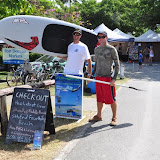
    2010-05-24 Stand up paddle boards at Port Douglas

    My first go on a standup paddleboard (SUP).  I was surprised at how much fun it is.  Great for when there is no wind.

    2010-05-25 Bike ride to Cape Tribulation

    The bike ride from Port Douglas to Cape Tribulation is one of the best I have ever done.  Riding through the rainforest is a delight.

    2010-05-26 Quaid Road cycle tour

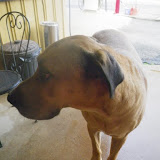
    A dog named Moose at the 9 mile Roadhouse on the road to Mount Molloy.  I did this ride from Port Douglas, inland to Mount Molloy, along to Quaid Road, then along it to Wangetti, then back to Port.


    2010-05-27 Kitecam 4 mile

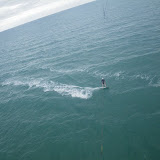
    Kitecam shots at 4 Mile and on downwinders to the Surf Club.

    Wednesday, May 12, 2010

    Democracy relies on transparency yet political party room discussions are secret

    I put the following post on my Facebook account:

    So democracy relies on transparency, openness and public debate, yet political party room discussions are secret. Isn't this wrong?
    Monday at 22:46 via Facebook for Android

    This status update has attracted by far the most number of comments so far.  I have reproduced them under the CC-BY-SA 3.0 licence my Facebook content is licensed with.

    Gail Plowman, Nick Bursey and 2 others like this.

    Oliver Minter i dont think so... politicians need to be able to discuss things however they do it - not everything should be taped and broadcasted - becoz the broadcast WILL ALWAYS BE EDITED AND OUT OF CONTEXT unless u think all australians have the time to have like a spare earpiece listening to the whole context of a meeting whilst we r at work or play?!
    Monday at 22:58 ·

    Oliver Minter But i'm all for openness and transparency Peter - the new invention of Participatory Budgeting is an example of this - but even this is incredibly complicated - if u want to see citizens on video learning how to vote on their local government budget and exactly where that money should go - i can send u links...
    Monday at 23:01 ·

    Sarah Holt-Foreman Oliver makes a very valid point. There comes a time when we need to allow politicians to do their job without every utterance being analysed or misinterpreted.
    Monday at 23:05 ·

    Peter Campbell The problem I see is that none of there utterances inside their top secret party rooms are ever made public unless there is a leak. People vote for local members to represent them, not for a secret society that regularly hold secret meetings pertaining to public policy and legislation. This seems like a serious contradiction to me. If the full context is available, then the record could be set straight. It is in parliament.
    Monday at 23:14 ·

    Oliver Minter i didnt think ALL of parliament is publicly taped and available - i thought just some of it is.. but maybe i'm wrong.. but i still agree with Sarah... aniway even if someone was to tape me in my own deliberations about an issue - i make many mistakes and change my mind - i wouldnt want media trying to take that thinking process out of my head and into misrepresentation..
    Monday at 23:20 ·

    Rachel King Eww politicians, dont trust them as far as I could throw one, the media is worse than the lot with their bias and propoganda. I loved this quote: "The modern proletariat is still just as self-satisfied with living in sub-standard conditons as he was at the time of Marx's writing, the only thing that now supresses him from uprising is the constant ...
    See more
    Yesterday at 01:34 ·

    Oliver Minter absolutely agree with u Rachel.. and unfortunately i am realising that 'Google' is far from a good thing - having one sole company in charge of ordering our internet searches for all of our information needs?! surely thats like saying "i'm happy with only ONE TV channel - thats all i need!!!
    Yesterday at 01:41 ·

    Rachel King hmmmm, exactly
    Yesterday at 01:42 ·

    Oliver Minter and pity none of these posts are "shareable" on facebook..
    Yesterday at 01:42 ·

    Oliver Minter Rachel- i think i'm insane!! Either i forget an enormous amount of important stuff that i have learned VERY frequently or i am just DUMB - becoz i honestly forgot that i felt that way about Google!! Completely forgot... Google is my homepage - its what i feel i need - just like the practicality and predictability of MacDonalds!!
    Yesterday at 01:46 ·

    Rob Jansson Never underestimate the importance of double speak in controlling the populous.
    Yesterday at 04:18 ·

    Oliver Minter what do u mean Rob?
    Yesterday at 04:21 ·

    Oliver Minter i think the whole issue Peter has brought up is important and we mustn't get too down about stuff- we are absolutley in the middle of one of the most important times in history- to me it compares to the wierd syncronicty that led to the hippie/left/socialism movement of the 60's and 70's.. which woz marked by an unprecedented number of pple in the western world becoming extremely politically active which then led of corse to an inevitable tipping point..
    Yesterday at 04:26 ·

    Oliver Minter i may be being a little too hopeful but all i mean is in the 50's and 60's Television gave information to the globe like never before in the 80's the internet woz born .. but in the 2000's - social networking and and social and peer created news was created - like wikipedia for example .. citizens around the world became more locally policticall y aware - the Global Greens movement didnt come from federal or state based politics but local..
    Yesterday at 04:30 ·

    Oliver Minter For the first time in all of human history - a political party can make an enormous amount of money just from little individuals like us on facebook...
    Yesterday at 04:31 ·

    Oliver Minter and that is only possible becoz we have online money now..
    Yesterday at 04:32 ·

    Peter Campbell Major parties seek the same prize - getting a majority of themselves elected so they can form a government. As they focus more on the prize and less on their notional roots and "visions" they converge onto the same turf. They seek broad appeal, to win over any undecided voters, and to discredit other parties that threaten them. The whole system has devolved into a game like Survivor, with about the same lack of sense and perspective. And a lot of it is secret.
    Yesterday at 21:11 ·

    Rachel King People who strive for power are the wrong type to be leading anyone. By discrediting opposing parties rather than the focus being upon how they can improve is to their own discredit. It becomes apparent how self serving they all are, give them a wage that equals that of the blue collar man and then see who fights for the PM position (not that it will ever happen)
    Yesterday at 21:24 ·

    Rob Jansson Double speak and hypocracy are the primary afflictions of modern democracies. These days the most successful politician would publically advocate the importance of transparency but have lots of secret meetings. The tradgedy is that darwinistically speaking what we most often end up with for politicians are people who are really good at deception.
    The really good cheaters are allowed to win and rule.
    Yesterday at 04:43 ·

    Oliver Minter look i agree with the issues raised by peter and u rob- but i honestly think your veiws are too simplistic..Democracy is absolutley extremely complicated and slow.. trying to organise your own test group of say 300 pple takes 10hrs and usually fails.. Local Government and local government citizen participation is the closest evidence we have in ...
    See more
    Yesterday at 04:55 ·

    Oliver Minter if u look at the youtube and internet versions of world first democratic citizens controlling a governments budget spending it is an absoltute eye opener..
    Yesterday at 04:56 ·

    Rachel King It seems to me (not wishing to sound like David Ikes right hand man) that no matter who gets in its still the same people running the show, just a different face ( or puppet). Did you see that the Rockafellers have been priming politicians again with their complementary holidays?
    Yesterday at 21:03 ·


    Tuesday, April 27, 2010

    We need a carbon levy

    Labor's fatally compromised emissions trading scheme has now slipped into political oblivion but climate change has not. 

    Kevin Rudd is a coal-eating surrender monkey!

    It is clear that we urgently need a price on carbon to provide incentives for people and industry to shift towards zero emissions energy sources.

    Professor Ross Garnaut and many others now support the immediate introduction of a much simpler carbon levy which would supplement other initiatives and policies to reduce Australia's carbon emissions.

    It is time for Kevin Rudd to implement a carbon levy now to give us the best chance of avoiding the looming consequences of dangerous climate change.


    Link: Rudd delays carbon scheme until 2012

    Wednesday, April 21, 2010

    Is Stephen Conroy's Internet censorship a religious crusade?

    Stephen Conroy, a Victorian Senator, has been relentlessly pursuing government censorship of the Internet, claiming that this is required "to protect children from harmful content" and to "stop bad people exchanging harmful content".  Unfortunately it will do neither.

    While his motive is reasonable, his secret Internet black list is not.  It will be easily subverted by the villains, and will be largely ineffective.

    Unfortunately Senator Conroy has deaf ears to these concerns, and is blindly forging ahead with his ill-considered proposal.  Who does he thinks he is "representing" as a Victorian Senator?  Not me, nor many other Victorians I suspect.   His fervour and devotion to this cause suggests possible religious motivations.

    Along the way, he has claimed that the Internet is not special.and should be censored like books, films and newspapers.  Senator Conroy has dismissed the torrent of criticism directed at his policy as "misleading information" spread by "an organised group in the online world".

    He has also ignored the obvious similarities to China's Great Internet Firewall censorship.

    Australia has just made Google's top 10 censorship list  of countries that have asked the search engine Google to hand over user data or to censor information.

    Internet censorship is part of a steady drift towards Big Brother. CCTV, secret police lists, anti-terrorism and anti-organised crime laws that all impinge in individual rights. Oh, and no Bill of Rights either.

    So the Labor Government is happy to behave like the autocratic Chinese Government? Its a disgrace!

    The solution is for people to install personal content filters if they wish, and for the goverment and police to actively pursue and prosecute wrongdoers.

    According to the U.S. Ambassador, "the United States has been able to accomplish the goals that Conroy has described for Australia, which is to capture and prosecute child pornographers, without having to use internet filters".  So can Australia.

    External links

    Sunday, April 18, 2010

    Senator Kim Carr happily subsidises fossil fuel but not electric vehicles

    It is very disappointing that the Australian Government continues to provide massive subsidies for fossil fuels - around $9 billion per year - while Senator Kim Carr has ruled out any subsidies for electric vehicles.

    From the Sydney Morning Herald:

    The federal government instead believes the future of the car industry lies in the development of existing technology across petrol, diesel and LPG engines.

    ''It's not our intention to run programs to support any particular form of technology,'' Minister for Innovation, Industry, Science and Research Kim Carr said.

    This is yet another example of the failure of the Australian Government and our elected representatives to provide leadership towards a low carbon future.

    Electric vehicles can reduce our carbon emissions if they replace fossil fuel powered vehicles, and they can achieve zero emissions when the source of electricity for recharging them is 100% renewable energy.

    This is also a missed opportunity to develop an electric vehicle that could be exported around the world.  China, France, Japan, the United States, Germany, Korea and India are all building electric vehicles.

    Kim Carr's so called "green car fund" spends $1billion of Australian taxpayers money on very dubious projects such as a "green 6 cyclinder motor" (Ford Australia).

    Not surprisingly, the oil companies in Australia regard their profits from fossil fuels to be "safe for 10 years".

    Kim, the government should subside the development of low emissions technologies.  You should also remove all subsidies on fossil fuel use.

    Saturday, April 17, 2010

    Catholics need to deal with sexual abuse by Priests

    I have for years regarded the Catholic religion as distorting the teachings of Christ in many ways.

    For example, Jesus spoke nothing about priests, bishops, popes or celibacy.

    Even the building of massive churches and cathedrals - common across many forms of Christianity - is foreign to the teaching of Jesus.  Jesus said that "the people are the  church".

    Now the worst kept secret for many years - that there are high rates of child sexual abuse and paedophilia among Catholic priests - is making headlines.

    This has been a problem for decades - in fact centuries.

    The Catholic church - all the way up to the current Pope - has developed a culture of denial and avoidance of this issue.  They judge the perceived harm to their church as greater than the obvious effect on victims.  I think this is a huge mistake.

    Children in a congregation, choir or the like, look to their Catholic (or any other) priest as a person of special status and a link to God.  They are regarded as morally correct and essentialy "good".  Imagine what happens when that trust and respect is shattered by sexual abuse.  Lifelong negative impacts on victim's lives result.

    Denial and a lack of action by church authorities compound the problem.  The victims are doubly victimised.  Offending priests are moved elsewhere and even promoted, when they should be expelled and put through rehabilitation programs.

    The entire Catholic church needs to accept full responsibility for this huge problem and deal with it.  They need to stop blaming the victims, gays, "outsiders", and drop the pretence that in some weird way the "church is the victim".

    I think a root cause of the common sexual perversion among Catholic priests is their mandatory celibacy.  As far as I can tell from limited research, the original Catholic priests were not celibate.  The Vatican became concerned around the 10C that priests were accumulating personal wealth and power and drifting away from the influence and direct control of the Vatican.

    Their solution to this was to make priests celibate - thereby denying them legitimate offspring - and breaking their ability to accumulate and pass on wealth.  This was dressed up as "interpretations of scripture" with notions of holiness and virtue.

    Unfortunately, the reverse has occurred.  The end result in an alarming number of cases worldwide is perversion and sexual abuse.

    The Catholic church undoubtedly does a lot of good things in many societies - but this issue threatens to overwhelm them if they don't deal with it and the perpetrators appropriately.   All other churches should take similar action too.  One sexual abuse case is too many.

    For the sake of their victims I hope they do so soon.

    In the meanwhile, keep your children away from circumstances where celibate priests may have the opportunity to molest them.

    Sunday, March 28, 2010

    Roads, water, smart meters and the 2010 Victorian state election

    The phoney campaign for the 2010 Victorian state election is well and truly underway.  Unfortunately, this highlights the failings of politics and government to follow due process, public consultation and make appropriate decisions.  Some examples follow.

    Smart meters
    The business case for smart meters has not been proven, yet residents are being forced to pay for them whether they want them or not.  Greater benefits at much lower cost could have been obtained by installing simple in house energy meter displays to allow consumers to see real time how much power they are are using and therefore set about reducing it.  Unfortunately, these "in home displays" have been dropped from the mandatory section of the Victorian Government's smart meter specification.

    http://www.theage.com.au/victoria/smarts-on-hold-but-consumers-still-paying-for-meter-20100327-r48y.html

    http://www.theage.com.au/opinion/society-and-culture/smart-meters-another-dumb-economic-idea-20100412-s40m.html

    Water
    The Brumby government has embarked on a carbon intensive and environmentally damaging water strategy that also has no solid business case.  The north south pipeline steals water from the chronically deprived Murray Darling basin and sends it over the divide to Melbourne.  The desalination plant will consume large amounts of energy, pollute the Bass Coast, and result in high net carbon emissions.  Meanwhile, water tanks, recycling and stopping logging in water catchments are all ignored, despite being more effective, cheaper and better for the environment.

    http://www.theage.com.au/environment/brumbys-water-plan-savaged-20100327-r4dh.html

    The relaxing of stage 3A water restrictions is a political stunt for the election.  Melbourne's water storages are still too low for this.

    http://www.theage.com.au/victoria/water-restrictions-never-again-above-stage-3-20100316-qcl6.html?autostart=1

    The economics of the desalination plan just don't stack up, and due diligence has not been a feature of the business case or the planning/approval process for it.
    http://www.theage.com.au/opinion/politics/water-plans-drift-behind-a-veil-of-secrecy-20100411-s0os.html

    Planning
    The internal workings of Government - including sham public consultations - is revealed in the media strategy written by Planning Minister Justin Madden's media advisor and accidentally sent to the media.  Madden and Brumby have claimed repeatedly that the document is "unusual" and "irregular: and even that they have "seen nothing like it".  What a load of nonsense.  This sort of spin and manipulation is clearly common.
    http://www.theage.com.au/victoria/madden-media-plan-shows-the-inner-workings-of-spin-20100306-ppts.html

    What has Victorian Attorney General Rob Hulls and the Brumby Government go to hide? Given a Ministerial advisor wrote at document that indicates planning processes would be subverted (for the Windsor), why should they be "excluded" from giving evidence to a Parliamentary Committee? This has a whiff of corruption about it.

    http://www.theage.com.au/victoria/labor-advisers-may-face-jail-20100412-s47q.html

    Public transport
    Decades of neglect and inadequate funding for Victoria's public transport by both Labor and Liberal governments have taken their toll.  Trains don't run on time, or at all, and are packed when they do.  Trams in the city are infrequent and now crowded to capacity.  Privatisation is a failure. The new Metro operator is as bad or worse than the previous one.

    The majority of funding in the 40b dollar transport plan is still going to roads and freeways.

    http://www.theage.com.au/national/brumby-rail-promise-stalls-20100214-nzgk.html

    Logging old growth forests
    The 2010 Timber Release Plan (TRP) for East Gippland published by the Victorian Government will dramatically increase old growth forest logging in 2010. It deliberately targets old growth forest areas from maps used during negotiations with environment groups about the government's 2006 election commitment to "protect that last significant old growth forest in East Gippsland" Download the letter to get the full story.

    http://www.greenlivingpedia.org/Image:2010_VicForests_logging_letter.pdf

    VicForests, under the control of the Victorian Government, has been taken to court by Environment East Gippsland to protect Brown Mountain.  The government refused to take appropriate action to protect endangered species such as the Potoroo from logging.   It is to be hoped the judge finds the government should do what the law says and survey for threatened species in forests before logging them.  Currently they don't - because they don't want to find them - which would mean they can't log the forests.

    http://www.greenlivingpedia.org/Brown_Mountain_old_growth_forest

    This track record is not good.  I think it may even cost them the next election.  Unfortunately, a Liberal/National government would most likely continue with all these flawed policies and practices.

    So think about voting Green or independent and choose carefully where YOUR preference goes.

    Sunday, March 07, 2010

    Smart roads or dumb politicians?

    After decades of far too little in investment in public transport, pedestrian and cycling infrastructure, our roads are now grindng to a halt.  Gridlock, or near gridlock, is choking Melbourne.  Short journeys that take 20 minutes in no traffic can now take over an hour.

    VicRoads is part of the problem.  When you have a government department with a brief to build and manage roads that consume most of the transport budget, all you get is roads and freeways.

    No one in transport or government seems to understand basic maths about how may cars it takes to move too few people - and when the system grinds to a halt.

    So now "Smartroads" is announced.  While this seems to be step in the right direction - trying to optimise road use between multiple types of transport - in reality this is what VicRoads has been attempting to do unsuccessfully for the last decade and prior.

    The basic assumption that roads - and shared usage - will solve transport needs in a big city is incorrect.

    Trying to juggle usage patterns according to the time of day is futile too.  Peak hour used to be when everybody wants to travel, but now we have constant "peak hour" in many places over much of the day - including on weekends.  Cars and trucks get in the way of cyclists, trams and buses at all times.

    The solutions we need are:
    • Convert Melbourne's tram network into a dedicated light rail metro, free from interference by cars and trucks
    • Provide safe dedicated cycling routes that allow commuters to travel up to 50km into and across Melbourne from all directions.  Bike lanes painted on lines  that cars drive across, or bike routes based on the "time of day" won't work
    • Build more heavy rail - Melbourne's population has increased by over 3 million people with no more rail infrastructure added to service new suburbs.
    • Introduce a congestion tax on cars travelling with less than two people in central Melbourne.
    • Genuine public consultation on transport options rather than government departments and politicians dressing up "business as usual" as something new.


    Friday, March 05, 2010

    Submission on National Heritage Listing of the Tarkine

    Peter Campbell
    Address supplied


    Australian Heritage Council
    GPO Box 787
    CANBERRA ACT 2601


    Via email: ahc@environment.gov.au

    5th March 2010

    Public comment submission on: National Heritage Listing of the Tarkine, north west Tasmania.


    I am writing to support the recent Emergency National Heritage Listing of the Tarkine.  I have visited the area and was greatly impressed by its cultural and natural values.  I firmly believe these values justify a National Heritage listing.

    The natural and cultural values of the Tarkine I think are particularly important and well recognised include;

    • One of the richest archaeological sites in Tasmania with the diversity and density of Aboriginal sites ranking it among "the world's greatest archaeological sites''.  There are hut site remains, pebble causeways, numerous extensive middens and petroglyphs
    • The largest single tract of rainforest in Australia, and the largest Wilderness dominated by rainforest in Australia with over 190,000 ha of rainforest in total
    • The northern limit of Huon Pine
    • A high diversity of wet tall eucalypt forests including large, contiguous areas of Eucalyptus obliqua
    • A great diversity of other vegetation communities, such as dry sclerophyll forest and woodland, buttongrass moorland, sandy littoral communities, wetlands, grassland, dry coastal vegetation and sphagnum communities
    • A high diversity of non-vascular plants (mosses, liverworts and lichens) including at least 151 species of liverworts and 92 species of mosses
    • A diverse vertebrate fauna including 28 terrestrial mammals, 111 land and freshwater birds, 11 reptiles, 8 frogs and 13 freshwater fish
    • Over 50 rare, threatened and endangered species of flora and fauna, including the Tasmanian Wedge Tailed Eagle and Giant Freshwater Crayfish
    • A complex and diverse invertebrate fauna, including; at least 16 species found nowhere else, the largest freshwater invertebrate on earth (Astacopsis gouldi) and one of the richest amphipod (a type of small crustacean) fauna diversities in the world
    • Globally unique magnesite karst systems in the Lyons/Keith/Arthur River areas and at Main Rivulet/ Bowry Creek area
    • Excellent examples of joint controlled drainage features (e.g. Huskisson syncline, Meredith Range, Rapid River)
    • Significant coastal features such as the Sandy Cape dune field, which are among the largest in Australia, and the Arthur River estuary (probably the best example of a large river estuary in good condition in Tasmania)
    • Dolomite karst systems in the Trowutta/Sumac/Black River region and Karst landforms in the 'Ahrberg' group (Donaldson and Upper Rapid rivers)
    • The largest basalt plateau in Tasmania retaining its original vegetation
    • Other geomorphic features such as the Bulgobac glacial end moraine and fossil sites at Marionoak and Hatfield River
    • Large areas of high quality wilderness centred on the Meredith Range and the Sumac region and three separate areas (Norfolk Range, Mt Bertha/Donaldson River and Savage/Keith River) which abut each other, creating a continuous stretch of wilderness covering much of the proposed National Heritage Area;
    • Areas of high quality scenic value such as; Australia's largest tract of rainforest, the Meredith Range, the Norfolk Range and the coastline
    The Tarkine contains a wide diversity of values.  It is a significant area that contains a large proportion of true wilderness.

    I commend it’s listing to the members of the Australian Heritage Council, and encourage you to recommend it’s permanent inclusion on the National Heritage List.

    I believe World Heritage listing should also be considered for this unique and precious region.

    Signed,
    Peter Campbell

    Friday, February 26, 2010

    Should Peter Garrett stay or go?

    The recent problems with the botched federal home insulation scheme is another example of politics leading to perverse outcomes.

    The case for improving energy efficiency of our buildings - both commercial and residential - is quite clear. Improvements in energy efficiency of both the building envelope and appliances translate to less energy use and therefore less carbon emissions.

    The Labor government announced a grand scheme to put insulation in the roofs of 2 million homes.  This sounded good.

    However, haste makes waste. Rolling the scheme out in a hurry for political reasons - possibly due to the desire to get some wins on the board in the lead up to the next federal election has led to serious problems, including:

    • insulation being replaced when it did not need to be
    • substandard installation, which reduces the efficiency of the insulation
    • unsafe work practices - one installed died due to heat exhaustion and others died from electrocution linked to foil insulation and staples contacting house wiring
    • unsafe houses - thousands are now at risk of ceiling fires due to faulty installation
    • with the scheme now canned, many installers are now out of work, or soon will be.
    All this was done under the oversight of Environment Minister Peter Garrett, who has no background or experience in either building regulations, program management or insulation.

    In addition, the States are responsible for building codes and enforcing safe building practices, not Peter Garrett.  This fact seems to have been completely overlooked by the mainstream media.

    Garrett's department is obviously at fault too - he has apparently been given little or no information regarding the risks of the accelerated program. If this is the case then senior figures in his department should be disciplined.  If Garrett is not telling the truth about when he read the risk report, he should be sacked.

    As it is, Garrett has been demoted, with the insulation rollout being shifted to Penny Wong's Department of Climate Change.  Of course, Penny Wong and Greg Combet no nothing about insulation either.  And Penny Wong has presided over the political debacle of the CPRS.

    Our political system is demonstrably incapable of considered and/or efficient action on this type of initiative.  Politics simply perverts what should straight forward and simple.

    On the balance of it, I think Peter Garrett should have been demoted, but I think that someone senior in his department should be too.  Kevin Rudd needs to accept responsibility for the failure of governance that allowed these problems to occur.

    The insulation program should be under the jurisdiction of a non-political taskforce with the right skills and oversight, not politicians.

    Link: Peter Garrett pushed aside by PM

    Why Myki should be canned - now

    I have given the new Myki "smart card" travelling system a go for a while now.  The large number of major problems with the system - and the manufacturers inability to fix them after over 3 years development and $800+ million - lead me the conclusion that the whole system should be scrapped.

    The basic technology architecture of the system is badly flawed, and the functional requirements (such as touching off) are nonsense too.

    Here are a few of the issues I have encountered.:
    • Very slow "touch off" response - you have to leave the card on the reader for about a second to get it read.  If you "swipe" the card it won't be read.  This is too slow for long queues of commuters. Possible causes could be substandard readers or network latency.  Both hard to fix.
    • Complex fare structure.  Complexity is bad.  It is expensive to code for and manage.
    • Myki doesn't work on trams.   This is mandatory requirement for an integrated ticketing system.  If I catch a train to work why would I rule out catching a tram during lunch?
    • A poorly designed website.  You have to "purchase credit" for a card you don't have to get to an option to order a card.  The site is confusing to operate and fails basic design principles you would expect an undergraduate to meet.
    • For the huge cost, the system offers very little benefits to public transport users, especially in its current form.  It is actually inferior to the current Metcard system on several counts.
    • Melbourne's public transport users need more train lines, more trains, .more drivers and more frequent services, not a half baked ticketing system that is really designed to fill the pockets of private operators and government coffers.
    • There was no public consultation on the design of or the need for this ticketing system.  

    The Bracks Labor government minister Peter Batchelor commissioned the project for reasons best know to the Labor government.  Now its a train wreck.  Let us stop throwing good money after bad and just use the card readers in the current Metcard system - that are there but have never been commissioned.

    Update: Apparently Myki is working on a few trams, but use it at your peril.  Ticket inspectors could fine you as it is not "officially working'.  Based on past experience with these inspectors, they could well fine you.  They obviously have instructions to maximise revenue and not consider mitigating circumstances.

    Wednesday, January 20, 2010

    Public transport - a paradigm shift is needed

    Transport Minister Lyn Kosky has just quit politics, but the public transport debacle is not just her fault - it lies with the Labor government (and preceeding Liberal governments) that have spent far too little on new trains, tracks and better services.

    The perennial low budget allocation for public transport compared to roads is the major reason that public transport infrastructure is now groaning to keep up with demand.

    Over three million more people now live in Melbourne than when the train network was built - and the last new train line constructed in 1930 - the Glen Waverley line.

    Far too little is allocated to serious improvements in sustainable transport infrastructure such as:
    • New train tracks to suburbs not currently serviced by trains - such as the planned (but never delivered) Rowville (servicing Monash Uni) and Doncaster lines.
    • Turning Melbourne's slow and inefficient tram network into a faster more efficient light rail network that is not impeded by traffic
    • Safe and direct bike paths to provide commute and recreational riding within suburbs and to central Melbourne - with proper signposting
    • A metro for inner Melbourne to take the load off congested CBD streets - linking Richmond, Fitzroy, Carlton, Melbourne University, North Melbourne, South Melbourne
    • Undergrounding several CBD trams to free up streets for pedestrians and street life.
    • Return public transport to public ownership and operation. The current blame game and lack of accountability for service delivery and quality - between Government and private operators - must stop.
    Martin Pakula, a unionist before he entered politics, is now the Minister for Public Transport. Don't hold your breath for any rapid improvements to public transport - or shift in the Brumby government's priority focus on roads and freeways.

    With climate change upon us, it is to be hoped that this situation will turn around so Melbourne's residents have convenient and effective climate friendly transport options available.

    Links


    Wednesday, January 13, 2010

    Is an Android phone better than an iPhone?

    I have been using an HTC Magic phone for two months. It is powered by the open source Android mobile operating system that Google was involved in creating.


    My experience is that the platform provides excellent access to Internet services such as browsing, searching, accessing email and contacts (via Gmail or other web account), and it also performs well as a phone.

    I think the killer features are:
    • Unified contacts list via Gmail - no more scattered contacts between phones, PDAs, laptops and email clients
    • Tethering is available without hacking the phone so you can use it as a modem
    • Integration with Google maps and GPS. You can hyperlink to maps directly from contact and calendar addresses, and use Google Maps to navigate there.
    This Greenlivingpedia article provides more details.

    In summary, I thin that Android has many features that make it superior to an iPhone, and many of the handsets are cheaper. You also now have a wider choice of handsets, including Samsung, HTC, Motorola (the Droid) and now even Google with its Nexus One (currently only available in the United States, and is manufactured by HTC).

    Thursday, January 07, 2010

    Japanese whaling must stop now

    The Japanese are still insisting on whaling in the southern ocean adjacent to Australia's Antarctic Territory. Their excuses for this appalling slaughter of whales are nonsense.

    They claim they kills whales for scientific purposes, yet there are no scientific publications of any consequence resulting. One whale maybe, but certainly not a thousand.

    They claim it is a traditional activity and that they like to eat whale meat. This is a direct contradiction to the first excuse, and it is also false. The Japanese have no traditions of eating whale meat, and have only recently engaged in large marketing campaigns in Japan to get people to eat more.

    The Japanese do not need to kill or eat whales. This barbaric activity must stop.

    A Japanese escort ship has just rammed and sunk the Andy Gill, one of Sea Shepherd's boats attempting to prevent them whaling. This is a deliberate and hostile action that could easily have resulted in a loss of life.

    The Australian Government (Peter Garrett and Kevin Rudd) must take immediate action to enforce international law regarding the protection of whales, and they must send a ship to the Southern Ocean to ensure that peace is kept and no deaths result.

    As individuals we can also boycott all Japanese goods and products until they stop the whaling