Monday, June 01, 2020

Donald Campbell 1878-1934

Donald Campbell (1878-1934) is my great grandfather on my father's side.

Donald Campbell, from records and notes from my father Douglas, was born in Barogill, Parish of Canisbay (near Castle Mey) on 13 July 1878. He was a champion ploughman and lived near Watten, inland from Wick, Caithness in the north of Scotland. 

When living in Caithness he was a member of the 1st Sutherland Highland Regiment with the Volunteer Rifle Corps (VRC).

He moved to Leith, Edinburgh around or before 1900 where he met and married his first wife Margaret Cunningham (1878-1926) on 1 Jun 1900. He worked as a lorryman at a flour mill. 

His children were:
  • James Campbell (1902-1913) - died young, possibly from cortical syncope and/or insipidus diabetes
  • Isabella Campbell (Bella, 1903 - 1990). I visited Bella in Scotland in 1985, descendents living in Edinburgh and Glasgow
  • William Campbell (1905-1968) - my grandfather who emigrated to Australia, descendents living in Australia, 
  • Donald Campbell (1907-1972) - emigrated to Australia, descendants living in Australia
  • Peter Hay Campbell (1911-1942)  - killed in WW2
The family lived at 25 Halmyre Street in Leith.


Donald transferred to the 5th V.B. Royal Scots (information from war pension record dated 6 April 1908). He was a good marksman.  A relative in Edinburgh sent me these photos of a medal he won in the Royal Scots.


General Competition, 1st Prize, Sergt D. Campbell, 1 Coy, 1907
6th Volunteer Battalion The Royal Scots


General Competition, 1st Prize, Sergt D. Campbell, 1 Coy, 1907

He was injured on the troop train that crashed in the Gretna Green train disaster during World War 1 on 22nd May, 1915. He told his men to put their feet up to avoid injury. Some 500 officers and men of the Leith Battalion of the Royal Scots Regiment were on the train. 232 were killed and 230 injured in Britain’s worst ever train crash.

Donald's first wife Margaret died in 1926.

His second marriage was to his first cousin Catherine Campbell in South Leith Parish Church on 4 Jul 1929.

Donald Campbell died in 1934 of pneumonia in Murray's Royal Asylum, Perthshire, Scotland, a mental health facility.

Margo, a distant relative (4th cousin) in Scotland located these details which were unknown by surviving relatives in Australia.

Wednesday, May 13, 2020

Peter Dutton, the Minister for Everything except his own portfolio

Peter Dutton seems free and willing to comment on every part of government except his own - the mega Department of Home Affairs.

Peter Dutton (ABC News,: Jed Cooper)

Catastrophic bushfires season of 2019-20

Dutton was mostly silent during the catastrophic bushfires season of 2019-20 even though the federal body Emergency Management is now part of Home Affairs and their brief is to 
"lead the Australian Government disaster and emergency management response."

Dutton did make a false accusation that arsonists were to largely blame for the bushfires.

For the duration of the bushfires, Dutton was simply missing in action.

Early response to COVID-19 Pandemic response in Australia

Peter Dutton was also very quiet during the early response to the COVID-19 pandemic. 

He did state that in response to people hoarding toilet paper that "We will come down like a tonne of bricks on those individuals because I think they’re the ones that have created this pattern of behaviour with hoarding and clearing shelves and normally sensible people have been wrapped in this because they’ve panicked when they’ve seen the shelves empty" 

On Friday 13 March it was announced the Peter Dutton had tested positive to COVID-19 after returning from the United States. He had met with other government ministers earlier in the week so there were concerns he may have spread the infection.

The Ruby Princess debacle

On 19 March the cruise ship Ruby Princess berthed in Sydney Harbour and thousands of passengers were allowed to disembark without any health checks or instructions to self-quarantine, despite the knowledge that people on the ship were ill with COVID-19 symptoms.

Australian Border Force, also under Home Affairs has responsibility at airports and seaports for: 
  • "We protect Australia's border and enable legitimate travel and trade. 
  • "We safeguard our border from people who seek to commit immigration fraud or threaten Australia's safety and security.
  • "We use the Incoming Passenger Card as a declaration of person's entry into Australia, and to provide information on a person's health, character details and biosecurity information."
Yet the Ruby Princess passengers were allowed to disembark, apparently without any involvement from Border Force, or a decision within Border Force was made to allow them to.

The Ruby Princess cruise ship has been the epicentre of Australia’s COVID-19 outbreak, with 600 cases and 19 deaths recorded from passengers on board.

Dutton refuses to answer questions about this or to take any responsibility for the apparent errors made by Border Force. Instead he has attempted to shift blame to NSW Health and NSW Police.

The distractions

Since the Ruby Princess, Dutton has commented on various matters in other portfolios including:
Peter Dutton weighs in regularly across multiple government portfolios, usually with a strong criticisms, yet he is seeminly unable to answer any questions about Home Affairs.

It is possible that all these attacks are distractions from his own responsibilities.  

Dutton's ambition to be Prime Minister might also be in play, he could be circling for a spill.

Dutton's aggressive stance on China, under the guise of a global #COVID19 investigation, has now started a trade war with China at a time Australia when we can least afford it.

The various ministers listed above should handle the matters they are responsible for and Dutton should focus on his day job.


Friday, May 08, 2020

Sweden has adopted in interesting approach to COVID-19

Sweden has adopted no lock-down and voluntary social distancing for COVID-19.

As at Friday 8 May 2020 11:00 AEST they have 24,623 reported cases and 3,040 deaths. They have less than half the population of Australia (6,900 cases, 97 deaths).

Sweden's daily cases of COVID-19 are not decreasing.


Sweden is conducting an interesting experiment. Not all Swedes agree.

It will be interesting to see in the long term how Sweden's death rate and economic impact compares with countries that have adopted a harder lock-down approach to COVID-19

Links


Tuesday, April 21, 2020

Living through the COVID-19 pandemic and opportunities for a new and better future

Living through the COVID-19 pandemic 


The worldwide COVID-19 pandemic has caused major disruption for life as we know it.  In no particular order:

Economies have slowed drastically due to restrictions on many businesses operating.

Many people have lost their jobs and are now unemployed.  Unemployment is reaching levels not seen since the 1930 depression.

Many shops cannot pay rents as they have no income while they are shut down.

Many housing tenants cannot pay rent as they have no income.

Governments have provided stimulatory spending including providing wage replacements to those who have been stood down by companies due to lack of work.  Some groups of people are not getting payments, including international students and casual workers who have been employed with a company for less than a year.

Social distancing to reduce the spread of infection has halted many social conventions including hugs, kisses and handshakes.

Social distancing has also been introduced in supermarkets and retail shops that remain open.

Panic buying has seen supplies of toilet paper and many food supplies depleted.

Many school and all university students are being schooled from home via the Internet.

People are walking and cycling in local parks either alone, with another person or with a family group from the same household.


People are heeding government advice to stay at home and avoid unnecessary travel.  The roads are very quiet.

Police are fining some people who break social distancing and other regulations imposed under a state of emergency.

Many people are working from home via the Internet.

The arts and music industries have ground to a halt with all public performances and exhibitions closed.

Sports are stopped and many sporting clubs and organisations are suffering cash flow problems. Some say they won't survive.

The stock market has suffered major losses with share prices falling [link]

Countries have closed their borders to most travel.

People on cruise ships have become marooned when no country will allow them to berth due to concerns about infection risk.

Air pollution has dropped along with automobile and industry emissions.

Families are spending time together with parents and children all at home during lockdowns.

People are cooking more - meals, bread, pastries, cakes etc.

Hand washing has become routine, along with disinfectant hand cleaner in some shops.

A National Cabinet has been formed to expedite decision making and align federal and state policies and actions for the COVID-19 pandemic.

Union leaders are talking to federal government ministers to develop appropriate support measures for companies and employees.

Companies with large debts and/or "just in time" manufacturing/retail models have been hit hard by the lockdowns imposed by governments.  Many, such as Virgin Australia, are in big trouble.  Some will fail.

Opportunities for a new and better future

Individuals, societies and governments can change how things are done when they want or need to.

We can pay a universal basic income to people who are unemployed.

Governments can build infrastructure that generates employment and benefits people including:
  • High quality bike paths, free from traffic
  • High speed rail links between cities
  • More public transport to give people the option for convenient and sustainable travel


Provide a universal public health system that delivers health services for all citizens and provides economies of scale.

Provide more government funding for research and development into various sectors including:
  • Public health and disease prevention
  • Renewable energy and energy storage solutions
  • Rebuilding centralised electricity grids to support micro-grids, distributed storage and distribution of renewable energy
Impose a travel tax on all car and truck travel.
  • Car users and trucks don't directly pay for roads so many people feel they are free to use.  However, increased road usage creates more demands for roads, creating a vicious cycle.

Support work from home as an ongoing arrangement
  • Less travel would free up a lot of time for many people
  • People could work from home, possibly on a roster system, for 1 to 5 days per week
Price air travel appropriately.
  • Excessive air travel is a luxury the planet cannot afford.  It should be priced to cover greenhouse gas emissions, leading to reductions in non-essential trips.
  • Local holidays are a more sustainable option
Protect forests and plant trees
  • Forest provide natural resources and are "services" such as producing water and drawing down CO2.  They also provide habitat for animals and plants and support biodiversity
  • Cease logging of native forests  
  • Plant trees on degraded farm land and public land to generate employment and increase the world's forest cover.

Transition to renewable energy
  • Develop are roadmap to transition to 100% renewable energy by 2030 and transition off fossil fuels including oil, gas and coal.
  • Generate employment in manufacturing and services for renewable energy


Make all elected MPs part of government
  • Reform politics and government so that all elected MPs have a role to play
  • Ditch political parties and "the opposition"

Feel free to add any suggestions in the comments.

Wednesday, April 15, 2020

Keeping schools open during COVID-19 pandemic - pros and cons

There are conflicting opinions in in Australia about whether students should continue to attend schools or do "schooling from home" until the risk of infection from COVID-19 is judged to be acceptable.

In Victoria, Australia, Premier Daniel Andrews has specified that schools remain open for parents that need them (e.g. emergency service workers). For others "if you can learn from home, you must learn from home".

Prime Minister Scott Morrison continues to say that children should be attending schools.

Advantages of children attending schools:
  • less disruption to education
  • reduced impact on parents working from home
  • emergency services workers and other parents can continue to work rather than stay at home to look after their children. 
Disadvantages of children attending schools:
  • infection risk for students
  • COVID19 infection asymptomatic in many children
  • infection risk for teachers, admin staff and cleaners
  • community infection spread via children & staff
  • no routine testing is being done (e.g. temperature testing)
  • some schools have been closed (re-actively) when teacher(s) have tested positive.
  • in a NSW childcare centre 7 daycare workers, 6 kids, and another 13 parents or close family members have been infected.
The Australian Health Management Plan for Pandemic Influenza specifies both proactive and reactive school closures.  In Australia, states are responsible for education. 

Schools are open in Victoria for parents that need them #COVID19 so its difficult to understand why Scott Morrison is calling for "schools to stay open"

See also


Friday, April 03, 2020

COVID-19 and novel coronavirus SARS-CoV-2 information and links

Some information I have collected about COVID-19 follows.


Terminology

  • COVIDー19 is a disease (now pandemic), an illness caused by a coronavirus
  • SARSーCoVー2 is a novel coronavirus (type of virus) that causes COVID-19
  • Isolation is for sick people with symptoms
  • Quarantine is for people who are at risk of infection.

Australian government advice and information


COVID-19 disease

  • COVIDー19 is is not the flu, it is 3-4 times more contagious and has much higher mortality rate that is likely to be between 0.5% to 6%. 
  • A vaccine could be 12-18 months away 
  • Among the over 3,700 passengers on the Diamond Princess cruise liner who tested positive for COVID-19, more than 46% were not showing symptoms at the time they were tested.
  • Asymptomatic infection is common in children, occurring in 10-30% of cases.

Current Advice in Australia as at 4 April 2020

  • If you can stay home, you must stay home.
  • Non-essential travel is restricted across Australia
  • All recreational activities beyond basic exercise are not allowed.  This includes fishing, hunting, boating, camping and golf.

Basic protective measures

  • Wash your hands frequently - Regularly and thoroughly clean your hands with an alcohol-based hand rub or wash them with soap and water.
  • Maintain social distancing - maintain at least 1 metre (3 feet) distance between yourself and anyone who is coughing or sneezing. When self isolating people should maintain social distancing from other family members within households.
  • Avoid touching eyes, nose and mouth - hands touch many surfaces and can pick up viruses. Once contaminated, hands can transfer the virus to your eyes, nose or mouth. From there, the virus can enter your body and can make you sick.
  • Practice respiratory hygiene - make sure you, and the people around you, follow good respiratory hygiene. This means covering your mouth and nose with your bent elbow or tissue when you cough or sneeze. Then dispose of the used tissue immediately.
  • Seek medical care early if you have fever, cough and difficulty breathing - If you have a fever, cough and difficulty breathing, seek medical attention and call in advance. Follow the directions of your local health authority.

Some questions about COVID-19

Should schools be kept open during the COVID-19 pandemic?

Does everyone who recovers from infection develop immunity?  There are reports of some people developing the disease again after recovering.

Will a vaccine for COVID-19 (SARS-CoV-2 ) be developed?  The common cold is also a coronavirus, there is no vaccine for it.  There is no vaccine for SARS (SARS-CoV virus) or MERS ( MERS-CoV) [link]

Why is COVID-19 so infectious?
  • Infected people can spread the virus while they show no symptoms
  • The virus can be spread on tiny droplets from coughing.
  • The virus can be spread by touching contaminated surfaces then touching your eyes, nose or mouth.

How long can COVID-19 persist on surfaces? Reports indicate that the time it survives depends on the type of surface. Under experimental conditions the virus remained viable:
  • in air - for  three hours
  • on copper surface for four hours
  • on cardboard surface after 24 hours.
  • on stainless steel and plastic surfaces - up to 72 hours
Why do up to half of people infected by COVID-19 show no symptoms? (asymptomatic)

Why is COVID-19 fatal for some people? 
  • The virus has caused severe respiratory disease in about 20 per cent of patients and killed more than 3 per cent of confirmed cases [link].
  • Older people, whose immune defences have declined with age are more susceptible
  • People with underlying health conditions (comorbidities) including hypertension, cardiovascular disease, chronic respiratory disease, diabetes and cancer are much more vulnerable [link]
  • Some infected healthy people have an immune overreaction, known as a 'cytokine storm', that can cause acute respiratory distress, which means less oxygen reaches the bloodstream - depriving organs of the oxygen they need.
What is the incubation period for COVID-19?
  • The median incubation period for COVID-19 is just over 5 days and 97.5% of people who develop symptoms will do so within 11.5 days of infection [link]
  • People may be infectious when they display no symptoms - this is under investigation.
Is COVID-19 like AIDS?
  • Researchers in China and the US have found that the virus that causes Covid-19 can destroy the T cells that are supposed to protect the body from harmful invaders
  • One doctor said concern is growing in medical circles that effect could be similar to HIV [link]

Links

Thursday, January 30, 2020

Scott Morrison and Peter Dutton are wrong to lock up people at risk of Coronavirus on Christmas Island


1. This will create a pool of people where risk of Coronavirus transmission is increased

2. Christmas Island is remote and expensive to get to and from

3. Christmas Island has limited medical facilities, people needing specialist treatment will need to be transferred to the mainland

4. The facility is not designed to operate as quarantine, it is a prison

5. Its contrary to Federal Govt advice: "People who have been in contact with any confirmed novel Coronavirus cases must be isolated in their home for 14 days following exposure"

6. Appropriate quarantine and health facilities are available in the states

So why do they want to do it?  To justify the $168 million+ expense of reopening the detention centre when only a family of 4 refugees are wrongfully detained there perhaps?

Also, why does  Chris Bowen (Labor) think using Christmas Island for coronavirus quarantine is a good idea?

Thursday, January 02, 2020

Why hasn't a national emergency been declared for 2019-20 catastrophic bushfires in Australia?

As at 11:00am Thursday 2 January 2020, 13+ people have died, more are missing. 6 million+ hectares burnt, 1500+ houses destroyed. Millions of animals dead. Evacuation in progress of 4,000+ people from Mallacoota and more from the NSW south coast. Many fires have been lit by recent dry lightning strikes.

Bushfires have crossed state borders of NSW, VIC and ACT. Mega fires in eastern Victoria and south NSW could join up. National coordination is clearly required.

Federal assets - army, navy, leased firefighting aircraft and personnel have now been deployed in support roles. Why are there different levels of support between NSW and VIC?

Emergency Management Australia (now under Home Affairs) has responsibility for coordinating and supporting national response to emergencies. Peter Dutton and David Littleproud are responsible ministers.

Littleproud said on 2 Jan that "APAC is coordinating the response" - but it is a peak body for collaboration, not coordination.

If a national emergency was declared, a national coordination centre (under EMA) could be spun up and would be directly responsibility to the Morrison government (Littleproud perhaps).

So far Scott Morrison, Michael McCormack, Peter Dutton and David Littleproud have NOT declared a national emergency.

Catastrophic bushfires and property losses have occurred in recently WA, SA, VIC, NSW, QLD and ACT. Many lives have been lost in SA, VIC and NSW.

This is gross dereliction of duty in the face of clear and present danger.

  • NSW - 15 deaths, 1300 homes lost
  • SA - 2 deaths, 90 homes lost
  • VIC - 1 death, 18 missing, 81 homes lost

If there is no actual mechanism to declare a national emergency (State of Emergency can be declared only by individual states) here is a solution:

1. Convene meeting of State Emergency Coordinators & premiers
2. Agree to declare national emergency
3. Determine which federal resources are required in states/territories
4. EMA establish national emergency coordination centre
5. Legislate to provide for this in the future.


Video: Bushfire emergency has claimed 1000 homes and razed an area the size of Belgium, ABC 7.30

Links


Eastern Victoria

NSW South Coast

Sydney and NSW Central Coast 

Port Macquarie to Coffs Harbour

Northern NSW to Gold Coast


Thursday, October 24, 2019

Scotland trip 2018 - Campbell family history


I have been researching my family tree in Australia and the Scotland.  We did a trip to Scotland in 2018 to visit some friends and locations.

Leith - Donald Campbell (1878-1934) and his son Peter Hay Campbell (1911-1942)

We flew into Edinburgh and stayed a night in Leith, Edinburgh's port suburb.

We visited 25 Halmyre Street in Leith where my great grandfather Donald Campbell (1878-1934) lived with his wife Margaret Cunningham (1878-1926) and their children:
  • James Campbell (1902-1913) - died young, possibly from cortical syncope and/or insipidus diabetes
  • Isabella Campbell (Bella, 1903 - 1990). I visited Bella in Scotland in 1985, descendents living in Edinburgh and Glasgow
  • William Campbell (1905-1968) - my grandfather who emigrated to Australia, descendents living in Australia, 
  • Donald Campbell (1907-1972) - emigrated to Australia, descendents living in Australia
  • Peter Hay Campbell (1911-1942)  - killed in WW2
25 Halmyre Street, Leith

25 Halmyre Street, Leith
We visited Peter Hay Campbell's grave in Seafield Cemetery He was a pilot in World War 2 and died when a glider he was flying crashed due to structural failure. This was probably during training for the D-Day invasion.

Sgt Peter Campbell's grave, Seafield Cemetery, Edinburgh 

Donald Campbell, from records and notes from my father Douglas, was born in Barogill, Parish of Canisbay (near Castle Mey) on 13 July 1878. He was a champion ploughman. He moved to Leith, Edinburgh around or before 1900 where he met and married his wife Elizabeth Cunningham on 1 Jun 1900. He worked as a lorryman at a flour mill. 

When living in Caithness he was a member of the 1st Sutherland Highland Regiment in Caithness with the Volunteer Rifle Corps (VRC) , then transferred to the 5th V.B. Royal Scots when he moved to Leith (information from war pension record dated 6 April 1908).  He was a good marksman.  A relative in Edinburgh sent me these photos of a medal he won in the Royal Scots.

6th Volunteer Battalion The Royal Scots

General Competition, 1st Prize, Sergt D. Campbell, 1 Coy, 1907
He was injured on the troop train that crashed in the Gretna Green train disaster during World War 1 on 22nd May, 1915. He told his men to put their feet up to avoid injury. Some 500 officers and men of the Leith Battalion of the Royal Scots Regiment were on the train.  232 were killed and 230 injured in Britain’s worst ever train crash.

Donald Campbell's second marriage was to his first cousin Catherine Campbell in South Leith Parish Church on 4 Jul 1929.

He died of pneumonia in Murray's Royal Asylum, Perthshire, Scotland which was a mental health facility. Margo, a distant relative (4th cousin) in Scotland located these details which were unknown by surviving relatives in Australia.

Wick - Donald Campbell (1810-1885) and Ann Ross (1809-1863)

The graveyard at Wick St Fergus Church is in a poor state.  Many of the gravestones are unreadable and broken. Harry Gray, a local, showed us around the church which is in use. A floor level has been added inside to create rooms for community use underneath the main chapel. Harry has located some religious artefacts that are now displayed in the church including the original St Fergus Font, dating from the 14th/15th century and 14th century image of the town's patron saint, St Fergus.

Harry said the structure outside with no roof was for the Earls of Caithness and that it is not well maintained as many of them were apparently hated!  It is known as the Sinclair burial aisle.  Archaeologists have recently determined that this structure is the only part of the original Kirk of St Fergus (built around 1567) that remains.

Harry has advised that the local council sent a team of workers into the graveyard during 2019 and did a great job in clearing trees, shrubbery and clearing the northern transcept of the old Kirk of St Fergus (Sinclair Aisle, burial place of the Earls of Caithness) and it now looks very much better. A  a team of volunteers lined up for spring of 2020 to do more work and make it more attractive and accessible. It is is great to see the history there being preserved.

Wick St Fergus Church

Graveyard around Cemetery at , Sinclair Burial Isle
Original St Fergus Font, dating from the 14th/15th century
14th century image of the town's patron saint, St Fergus
I found the headstone for Donald Campbell (1810-1885), my 3rd great grandfather and his wife Ann Ross (1809-1863) (the parents of James Campbell). 

Donald Campbell and Ann Ross headstone or memorial


The inscription is: 

"In memory of Donald Campbell died July 18 1885 aged 75 years. Also his wife Ann Ross died Feb 1863 aged 56 years. Erected by their sons."

Watten - James Campbell (1849-1911) and family

We visited Nucleus: The Nuclear and Caithness Archive near Wick airport to research family history. They had records of the Watten Cemetery with a map of graves, on which I located the grave of James Campbell (1849-1911) and family members. James Campbell was the son of Donald Campbell (1810-1885) and the father of Donald Campbell (1878-1934).  He is my 2nd great grandfather.

He married Elizabeth Donn (1850-1893) on 18 Dec 1877 in Barogill, Caithness.

We visited the Watten cemetery and located the grave which was obscured by holly. The church is no longer there, only the footings remain.


The inscription reads (information in brackets added):

Elizabeth Donn 
Beloved wife of James Campbell, Shepherd Noss.
Who died April 23 1893, aged 43 years (pneumonia)
Also their daughter Elizabeth
Who died Dec 24 1894, aged 2 years 9 months (Enteritis)
Also their daughter Mary Sutherland (myxoedema, a thyroid condition)
Who died March 16 1903, aged 17 1/2 years
Also the above James Campbell   (diabetes mellitus)
Who died 17th May 1911, Aged 61 years.

There was a lot of tragedy in that family with people dying from diseases that are curable or treatable now.


James Campbell's other children were:
  • Isabella Campbell (1888–1978) - emigrated to Australia and lived in Melbourne
  • William Campbell (1880–1962) - emigrated to Australia and lived in Melbourne
  • Annie R Campbell (1884-????) - unknown.

Refaithy, Stirkoke


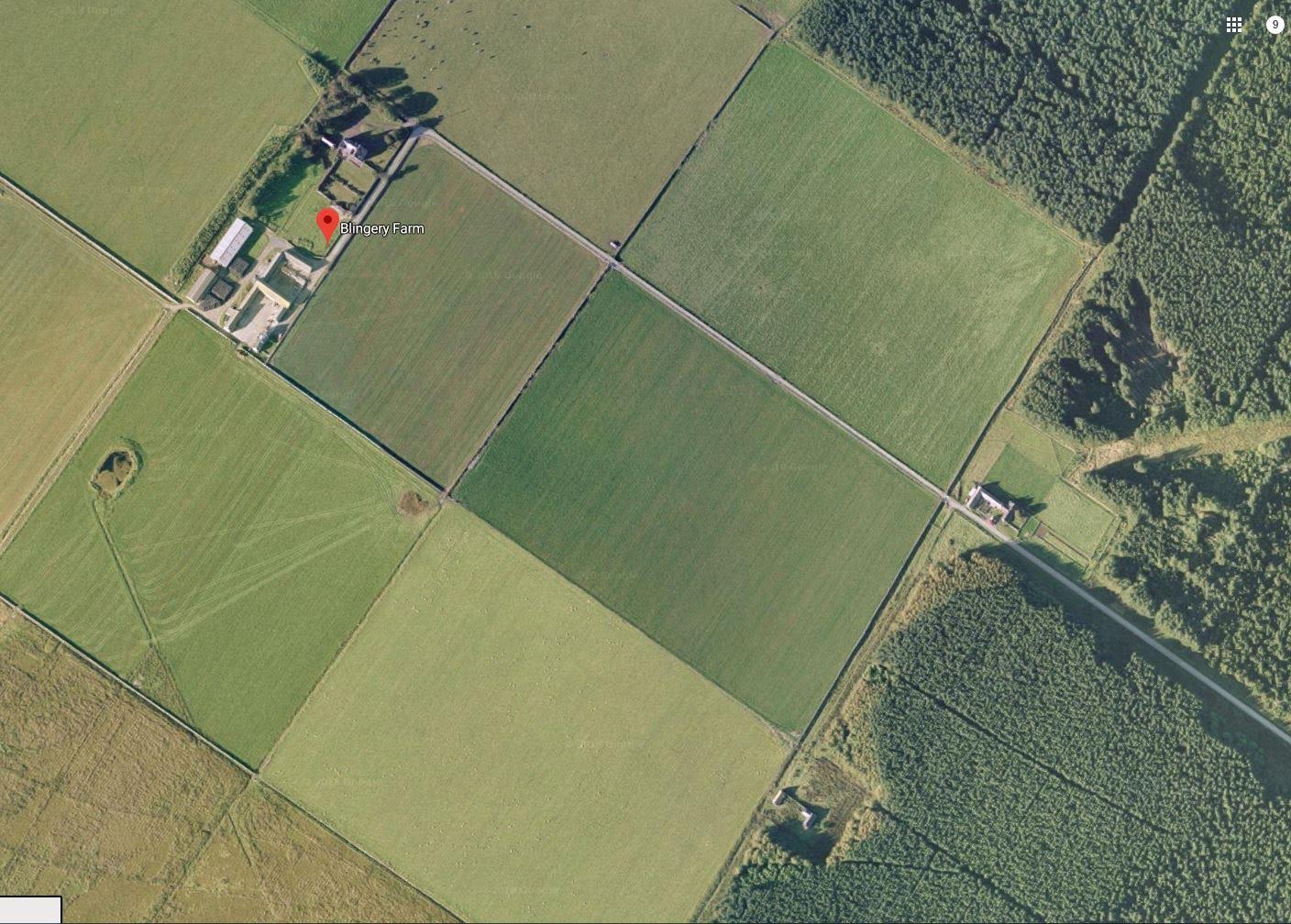
Blingery Farm (top left), Refaithy (right) and Upper Refaithy (bottom right)

Donald Campbell (b1810) died at Refaithy, Stirkoke. We drove to Stirkoke to ask directions. The manor house is in ruins and is not accessible. A local gave us directions to Blingery Farm.

On the road Blingery farm we came to a farm house called Refaithy which has a retired English couple living in it. We had a cup of tea and a chat but they didn't know much about the history of the house.

Further enquiries suggested that the Campbells resided at Upper Refaithy so we drove that location.  The old house ruin was recently demolished and a new house was being built, but the original garage was intact. I have been able to find some photos of the ruin.
Upper Refaithy ruin prior to demolition
Upper Refaithy ruin prior to demolition. Shed remains.

Donald Campbell (1850-1914, James Campbell's brother) and family at Upper Refaithy in 1905
James Campbell's brother Donald Campbell (1850-1914) lived in the area his entire life and his descendants are still living in Caithness.

Houstry

My oldest known ancestor is Alexander Campbell (1781-???? ), his birth place is listed on geneology records as Houstry, an old crofting village that is in ruin. We visited the location on our way south after leaving Wick.  There are ruins of stone buildings and a couple intact used as for farm storage.  There is also a broch nearby.  Alexander Campbell was the father of Donald Campbell (b1810) and is my 4th great grandfather.  The Scottish inventor Alexander Bain was born in Houstry.

Houstry ruins (right) and broch (left)


Houstry ruins with the broch behind


More information about my ancestry is here.

Tuesday, April 30, 2019

Kooyong ballot paper 2019 federal election

The order of candidates on the ballot for Kooyong for the 2019 federal election is:

D'ELIA Steven United Australia Party

YATES Oliver Independent

ZUBAC Angelina, Independent

FRYDENBERG Josh Liberal

STEWART Jana,  Australian Labor Party

HINKLEY Davina, Animal Justice Party

BURNSIDE Julian, The Greens (VIC)

CHANDLER Bill, Independent


Analysis of candidates

D'ELIA Steven United Australia Party - Right wing (Clive Palmer)

YATES Oliver Independent
  • Strong policies on tacking climate change and renewable energy

ZUBAC Angelina, Independent
  • Some policies on tacking climate change
  • Stood in previous 2014 election
FRYDENBERG Josh Liberal
  • Deputy Leader of Liberal Party and Treasurer
  • Very weak policies on tacking climate change and renewable energy
  • Liberal party policies and politics are now mostly right wing
  • Very few policies released for this election
STEWART Jana,  Australian Labor Party
  • Running a strong local campaign
  • Labor party policies on climate change are much stronger than the Liberals but could be improved
  • Significant policies including tax reform announced well in advance of and during the election campaign.
HINKLEY Davina, Animal Justice Party
  • Running mainly on animal rights
BURNSIDE Julian, The Greens (VIC)
  • Prominent barrister well know for advocacy on refugees
CHANDLER Bill, Independent
  • Strong policies on climate change, transport
  • Extensive experience in urban planning
How to Vote

You must number every square (candidate) on the ballot paper in order of your preference.

How to vote cards handed out by parties and candidates only provide their suggestions on how to allocate your preference.  The choice is yours.

I am considering supporting independent candidate(s) then putting Jana Stewart (Labor) ahead of Josh Frydenberg (Liberal Party) due to Labor's more progressive policies as per below.


If you want your preference to go to the Morrison government then put Frydenberg above Stewart, but you can still vote for independent candidates before them.

If you strongly support the Greens, Labor or the Liberals then give them your first preference.

Links

Monday, April 29, 2019

Victorian Senate ballot for 2019 federal election - how to vote card

Here is my analysis of the Victorian Senate ballot for the 2019 federal election.

In my assessment there are considerably more right wing political parties on the ballot.

These ratings take into account climate change policies.

Note that while the Health Australia Party has reasonable climate change policies they oppose mandatory vaccination.


Voting
You can vote "above the line" by numbering at least 6 parties on the top row of the ballot paper.

You can vote "below the line" by numbering at least 12 boxes below the top row of the ballot paper.

See: Practise voting - Senate - Australian Electoral Commission 


See also: Senate Preview: VIC - ABC News (Australian Broadcasting Corporation)

Leave any feedback in the comments below.


Wednesday, August 15, 2018

Fraser Anning calls for "White Australia" and "Final Solution" for refugees

Senator Fraser Anning, elected as a One Nation senator after getting 19 votes, called for "White Australia" and a "Final Solution" for refugees in Australia during his speech in the senate on 14 August 2018.

Anning is now with the Katter Party.

He also said the reasons to ban Muslim immigration were "compelling and self-evident", labelling them welfare-bludgers and criminals.

His speech is completely unacceptable in the Australian parliament, he should be expelled.

The Senators that shook his hand after his speech were:
  • Mathias Cormann, Liberal, WA
  • Bridget McKenzie, National, Vic
  • Matt Canavan, National, QLD
  • Nigel Scullion, Country Liberal, NT
  • Concetta Fierravanti-Wells, Liberal, NSW
  • Cory Bernardi, Australian Conservatives, SA
  • Derryn Hinch, Independent, VIC
  • Tim Storer, Independent, SA
  • Barry O'Sullivan, Liberal QLD
  • David Leyonhjelm, Liberal Democrats, NSW
  • Amanda Stoker, Liberal, QLD
  • James McGrath, Liberal National OLD
  • Jonathon Duniam, Liberal TAS
  • James Paterson, Liberal, Vic
  • Peter Georgiou, One Nation, WA
  • John Williams, National, NSW
  • Dean Smith, Liberal WA
  • David Bushby, Liberal, TAS
  • Anne Rushton, Liberal, SA
  • Stirling Griff, Centre Alliance, SA
  • Rex Patrick, Centre Alliance, SA
In doing so they have endorsed racist hate speech.  None of them are fit for office.

Friday, May 04, 2018

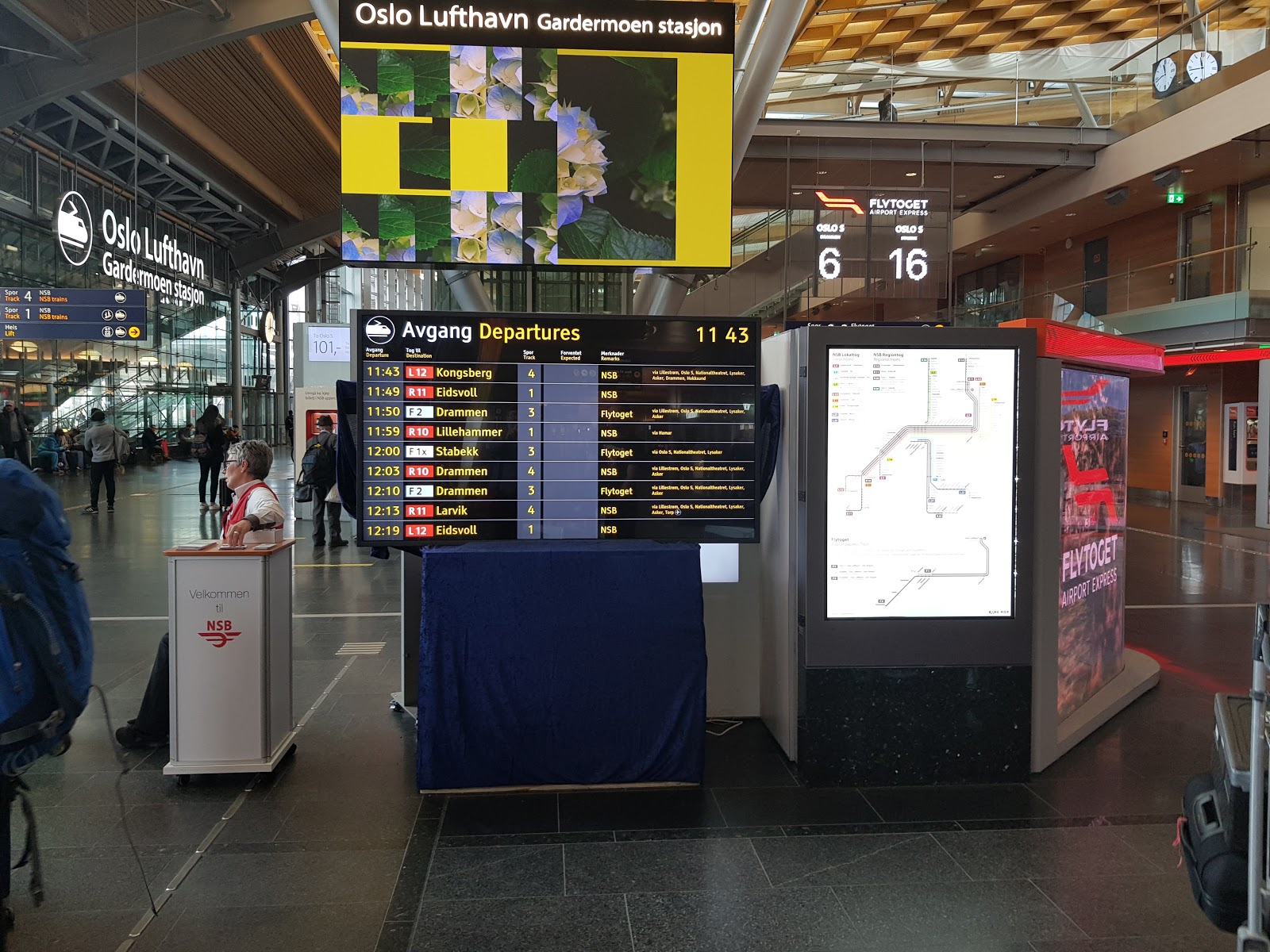
Oslo airport with rail link is superb

Norway has got it right with Oslo airport, arrival and departure are fast and efficient. Its really well organised and efficient.

There are many shops with a wide selection of food  travel goods, books and souvenirs.

Connections to trains inside, its very easy to get to Oslo. My favorite airport.

Let's hope we see facilities like this in Melbourne!