Friday, May 04, 2018

Oslo airport with rail link is superb

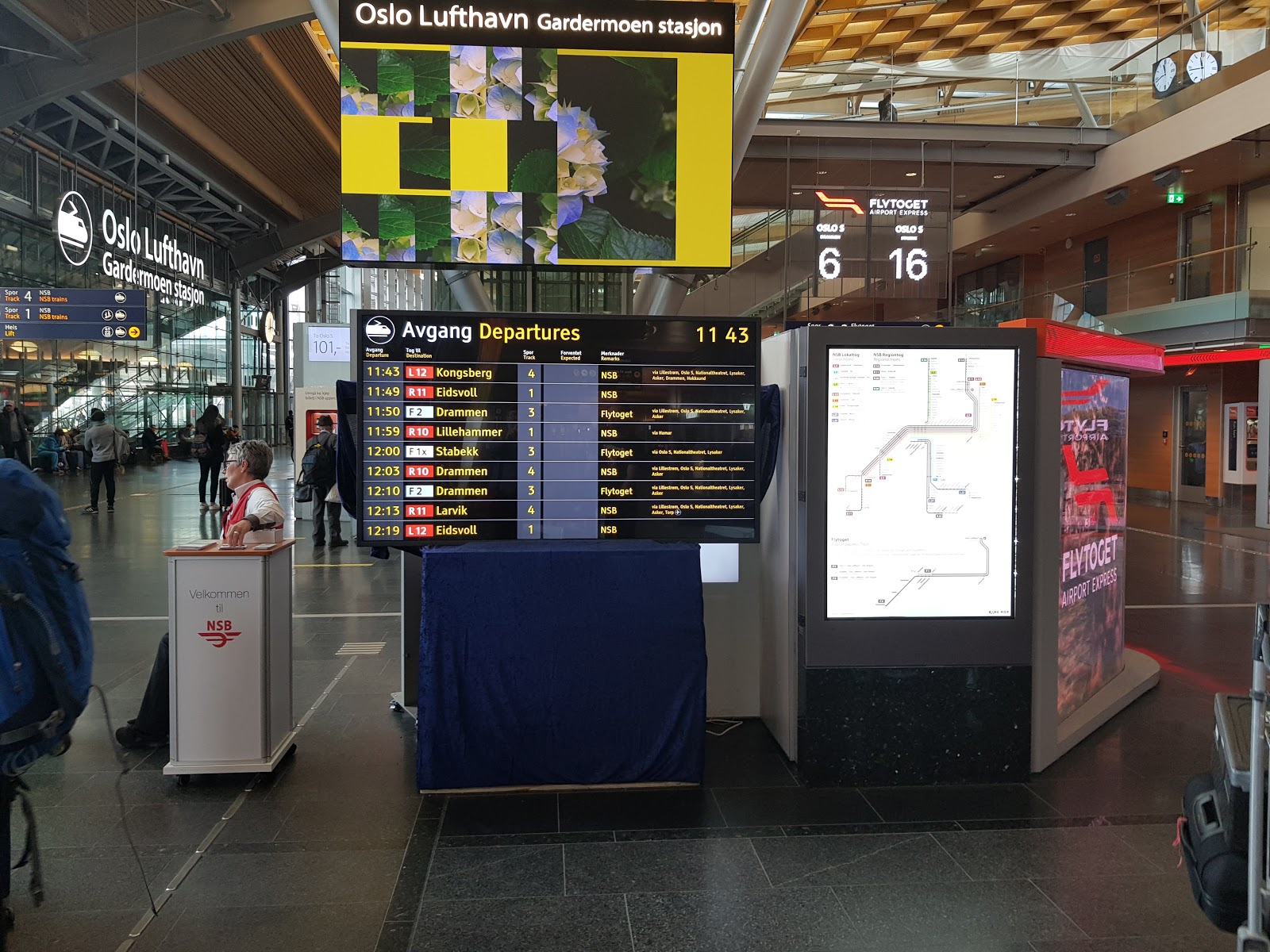
Norway has got it right with Oslo airport, arrival and departure are fast and efficient. Its really well organised and efficient.

There are many shops with a wide selection of food  travel goods, books and souvenirs.

Connections to trains inside, its very easy to get to Oslo. My favorite airport.

Let's hope we see facilities like this in Melbourne!


Saturday, February 17, 2018

EMMA ALBERICI. There’s no case for a corporate tax cut when one in five of Australia’s top companies don’t pay it.

There is no compelling evidence that giving the country’s biggest companies a tax cut sees that money passed on to workers in the form of higher wages.
Treasury modelling relies on theories that belie the reality that’s playing out around the world.
Since the peak of the commodities boom in 2011-12, profit margins have risen to levels not seen since the early 2000s but wages growth has been slower than at any time since the 1960s.
It’s also disingenuous to talk about a 30 per cent rate when so few companies pay anything like that thanks to tax legislation that allows them to avoid paying corporate tax. Exclusive analysis released by ABC today reveals one in five of Australia’s top companies has paid zero tax for the past three years.
And while the Treasurer and Finance Minister warn that Australia’s relatively high headline corporate tax rate means Australia remains uncompetitive and companies will choose to invest in lower taxing countries, the facts don’t bear that out. Business investment in Australia has been at historically high levels over much of the past decade despite our comparatively high headline corporate tax rate.
There’s more to investment than corporate tax rates
Before Donald Trump cut the US corporate tax rate earlier this year, it was 5 to 9 percentage points higher than Australia’s. That hasn’t deterred Australian companies from seeking opportunities in America instead of Ireland, where the corporate tax rate is less than half ours (12.5 per cent), or Singapore (17 per cent).
In truth, businesses make decisions about where in the world to park their money based on myriad reasons, possibly least of which is the headline corporate tax rate.
Will I be closer to my main customers? Where is the best talent located? What are the labour costs? How onerous are the regulatory hurdles to investment? Is the culture and language easy to navigate? Is the country politically stable and is there respect for the rule of law?
When Incitec Pivot chose to build a $1 billion factory in Louisiana rather than Australia, it did so due to America’s strong productivity levels and its speedy approvals processes. Tax was insignificant on the pros and cons list.
Tax rates don’t matter if you’re not paying tax
High-profile chief executives like Qantas chief Alan Joyce are adamant that investment decisions rest largely on the rate of a country’s corporate tax. But it’s hard to see how a lower tax rate is an incentive for investment when one in five of our biggest companies haven’t paid any corporate tax at all in at least three years.
Qantas is about to clock its 10th year tax free. Qantas won’t pay tax again until its profits exceed the tax losses recorded since 2010. Only when all the accumulated losses are offset will a lower tax rate mean a higher cash flow. Besides, regardless of where the corporate tax rate sits, the airline has already indicated an intention to invest $3 billion across 2018 and 2019.
The overwhelming benefit of higher profits flows to shareholders. A zero corporate tax bill at Qantas has certainly seen one significant wage rise at the company — the chief executive’s. The benefit to workers has been less pronounced.
According to the Australian Services Union, representing just under half of all Qantas workers, the average pay rises for staff since the airline has returned to profitability have barely kept pace with inflation.
Alan Joyce, on the other hand, has seen his total salary close to double from $12.9 million in 2016 to $24.6 million last year thanks to a huge jump in the value of shares provided as part of a bonus scheme.
Linda White, Assistant National Secretary of the Australian Services Union told the ABC she is far from convinced about the value for workers of a corporate tax cut:
“While Qantas workers have seen pay rises of less than 3 per cent on average over the past decade, we’ve seen the CEO’s salary balloon to almost $100,000 a day — much more than most workers earn in a year. It doesn’t trickle down — it trickles up, and the rules need to change to give workers a better deal in this country.”
The apples and apples comparison
When drawing comparisons with experiences in other countries, Canada provides a good like for like profile.
Australia and Canada share a similar history and are both resource rich economies. Our financial and political systems are also on par.
Canada cut its corporate tax rate from 42.4 per cent in 2000 to about 26 per cent in 2011, where it has remained. In 2000, Australia cut its corporate tax rate from 34 per cent to its present 30 per cent.
Business investment rose in both countries during the mining boom but it rose more in Australia, despite a corporate tax rate that’s four percentage points higher than Canada’s.
Economist Saul Eslake says:
“It can be argued that the mining investment boom was bigger in Australia than Canada but now that it’s over in both countries, it’s worth noting that business investment as a share of GDP was 2.4 per cent higher in Australia in 2016 than in 2000, as against only 1.5 per cent higher in Canada, despite Canada’s massive cut in company tax.”
It is also worth noting that wages have risen by about 20 per cent more (in nominal terms) in Australia than in Canada since 2000, despite Canadian companies having had a much bigger corporate tax cut.
Do workers really win?
The White House claims the recently legislated cut in the US corporate tax rate will translate to higher wages for the average worker of between $4,000 and $9,000 a year, but there is no credible evidence to support that boast.
In fact, the opposite has been true in practice when you compare business activity in Britain and America. Between 2006 and 2013, while British businesses were paying increasingly less in tax (from 30 per cent to 19 per cent), wages went down not up. UK wages have started to grow over the past four years but at a much slower rate than in the United States where corporate tax rates had remained high.
Some commentators have seized on a study from Germany to support their theories about corporate tax cuts trickling down to workers. Saul Eslake makes the point that the German economy is not all that similar to Australia’s:
“Among other things, workers’ representatives sit on the ‘supervisory boards’ of large German companies so there is probably a different debate within German boardrooms as to how the benefits of any cut in the corporate tax rate in Germany might be shared among employees and other stakeholders.”
In his speech last week, the Reserve Bank Governor Philip Lowe reiterated the need for Australia to pursue an internationally competitive tax system but he did not specify which, if any parts of the Tax Act, might need amendment. He kept his comments on the topicvague:
“The issue of how the tax system affects the competitiveness of Australia as a destination for investment is one of ongoing political debate.”
The headline 30 per cent rate is misleading
Adding to this debate is the issue of average and effective tax rates. Effective tax rates are said to drive investment decisions and take account of what companies actually pay once deductions, depreciation and other tax minimisation strategies are considered.
According to a report published last year by the US Congressional Budget Office, Australia’s effective tax rate, at 10.4 per cent, is among the lowest in the world.
The average rate paid by American companies in Australia is just 17 per cent.
The Treasurer’s office takes issues with these figures, claiming they are out of date because they are based on data from 2012. The Government prefers a study by Oxford Universitythat puts Australia’s effective average tax rate at 26.6per cent and at the higher end of the scale.
Several analysts consulted by the ABC disagree. Managing director of Plato Investment Management, Don Hamson says:
“Whilst the data used in the 2017 CBO report is from 2012, it is the best analysis available and I don’t believe the Australian company tax landscape has changed significantly since 2012.”
Dr Hamson has worked in banking and finance in Australia, as a university professor in Australia and the United States and has served on the ASX Corporate Governance Council.
Regardless of which effective tax rate you prefer, both the Oxford and the CBO data demonstrate the folly of focusing exclusively on the headline corporate tax rate of 30 per cent.
Do tax cuts boost investment?
Chris Richardson from Deloitte Access Economics told the ABC’s Q&A that there was a “consensus” from the experts about the macroeconomic benefits of a corporate tax cut.
He said the cut represented $20 billion a year in growth for the Australian economy with two out of every three dollars showing up as higher wages. Those figures (and experts) came from Treasury who provided modelling on behalf of the Government.
The numbers are based on the widely, but not universally, accepted theory that cutting the company tax rate will raise investment, which should in turn boost productivity and lift wages.
Apart from the obvious point that all else is not equal in practice, not all investment boosts labour productivity.
According to other Treasury-commissioned modelling, if the rate is lowered from 30 per cent to 25 per cent then gross domestic product will double by September 2038 as opposed to December 2038 without the cut. Both models predict that in 20 years’ time the unemployment rate will be 5 per cent regardless of whether we spend $65 billion on company tax cuts or not.
In truth, it is hard to find real-world evidence to support these economic theories, so the Government might be wise to heed the words of Plato: “A good decision is based on knowledge and not on numbers.”
Dividend imputation often overlooked
The other issue often overlooked is the impact of Australia’s dividend imputation system. Australia and New Zealand are the only two countries in the OECD that grant companies the right to attach tax credits to dividends paid out to investors.
In most countries, companies pay tax and then shareholders pay tax on their dividends. Australia taxes just once. Cutting the company tax rate therefore doesn’t result in a higher after-tax return on investment to Australian shareholders in Australian businesses so Treasury’s theoretical model doesn’t hold.
Experts including economist Saul Eslake estimate that Australia’s 30 per cent corporate rate with dividend imputation raises about as much tax for the government as a 20 per cent rate without dividend imputation.
The principal beneficiaries of a cut in Australia’s corporate tax rate are overwhelmingly foreign companies and foreign shareholders in Australian companies. There is no guarantee at all that cutting the tax they pay in Australia will lead them to increase the level of business investment in Australia.
Can Australia afford to spend $65 billion?
The last time a government splashed around cash in the form of tax cuts the treasurer was Peter Costello, who had no debt and no deficit to contend with, thanks to oversized profits and attendant corporate tax flowing from the mining boom.
In 2018’s Australia, it’s hard to imagine how a government could ever again manage to give away the equivalent of Mr Costello’s $170 billion worth of tax cuts while still protecting the surplus.
It’s been 10 years since the Australian budget was last in surplus. With a debt of more than $600 billion, many are questioning the merits of prioritising a $65 billion giveaway to big business in the form of a tax cut.
Back in November 2016, the president of the Business Council of Australia, Grant King was warning the Government not to put the country’s AAA credit rating at risk by ignoring budget repair. He told ABC’s AM program:
“We are seeing indications that the deficit is deteriorating so it is going to be a challenge.”
Yet today the BCA and its high-profile members like Mr Joyce are insisting on a company tax cut that would blow a massive hole in the Government’s revenues and push the budget and national debt further into the red.
Emma Alberici is the ABC’s chief  economics correspondent.  This article first appeared on the ABC website.

Wednesday, January 31, 2018

Open letter to Labor Cabinet - reject the polluting destructive Adani coal mine.

TO: Labor Cabinet

The massive Adani Coal mine must not proceed.  It will contribute to the death of the Great Barrier Reef and the coal produce will contribute to climate change when it is exported and burnt.

When burned, the coal will generate greenhouse gases
equivalent to 4.49 billion tonnes of carbon dioxide.

The open cut mine will also destroy the Queensland environment in the region.  Very few full time equivalent jobs (1464) will be created, contrary to company claims.

Adani has been granted unlimited volumes of water for 60 years from the Great Artesian Basin, which will compromise other users of this water.  Around 200 small towns draw their water from the basin’s aquifers.

A significant portion of the remaining habitat of the endangered black-throated finch is within the bounds of the Carmichael mine site. The mine will remove the best remaining habitat, and fragment the good quality habitat that remains.

The vulnerable squatter pigeon’s habitat is much larger, but the entire Carmichael mine site is within its territory.

The yakka skink is another vulnerable species that was part of the court case that saw Adani’s mine approval briefly overturned in 2015. The mine and connecting rail are directly within its habitat.

Shipping the coal to the international market also requires a huge expansion of the Abbot Point Coal Terminal (which is also owned by Adani).  This means dredging 1.1 million cubic metres of the seabed and dumping it near the Caley Valley Wetlands.

Your decision on this will go down in Australian environmental history.

I will strongly consider voting for Labor in the next federal election if you withdraw support for the Adani coal mine.

Please reject this polluting and destructive coal mine.

Our future is in your hands.

Yours sincerely,
Peter Campbell

You can send your letter to the Labor Cabinet from a link here


Tuesday, August 08, 2017

Plebiscite on gay marriage is a political ruse for delay and polarisation

A majority of the Australian population clearly support marriage applying equally to heterosexual and gay couples.  It is a basic human right.

However, some religious groups and a cohort of federal MPs (both Labor and LNP) oppose it for personal reasons.

There has been only 3 Plebiscites in the history of Australia:

  • 1916: military service conscription (defeated)
  • 1917: reinforcement of the Australian Imperial Force overseas (defeated)
  • 1977: choice of Australia’s national anthem ('Advance Australia Fair' preferred.)
John Howard changed the Marriage Act by parliamentary vote to make it "between and man and a woman" - proving that no plebiscite is required.

The plebiscite was proposed by Tony Abbot when he was PM as a tactic to delay legislative changes, and provide a platform for vilification and hate speech by the minority who oppose marriage equality.

Malcolm Turnbull is too spineless to stop this expensive, divisive, ineffective and unnecessary plebiscite.

It will be ineffective because the result is not binding on MPs.

Our MPs should just do what they are elected for: vote on a bill to change the Marriage Act.


Friday, August 26, 2016

Open letter to Josh Frydenberg - SAVE ARENA stop the $1 billion cut

TO: Josh Frydenberg
Minister for Environment and Energy,

I’m writing to you today with a very important message about ARENA, the Australian Renewable Energy Agency. That's the Agency you want to cut $1 billion in funding from.

ARENA is a critical force in driving renewable energy research and development in Australia. It has funded projects that developed the most efficient solar PV [1] and solar thermal technology in the world [2].

ARENA is crucial if Australia is to continue to lead in renewable energy research and innovation. If protected, projects funded by ARENA grants will create thousands of jobs [3], and help Australia transition to a renewable future.

Your government talks up innovation, but slashing ARENA's grants funding will cut the legs out from underneath a key industry that would otherwise be set to boom.

As your constituent, I am asking you to lead on innovation and make the right decision for Australia's energy future. Don't send Australia back to the Dark Ages. Don't cut ARENA.

Also, gas is just another fossil fuel and must not be used as a "transition to renewable energy".  The transition should be directly to renewable energy.

The same applies to coal seam gas - there should be a permanent ban on exploration and production of CSG in Victoria.

Regarding your previous comments on nuclear energy, could you please confirm that this dangerous and expensive energy source will  not be used in Australia?

[1] Milestone in solar cell efficiency by UNSW engineers, UNSW Newsroom, 17 May 2016, http://newsroom.unsw.edu.au/news/science-tech/milestone-solar-cell-efficiency-unsw-engineers

[2] ANU team cracks solar thermal efficiency of 97% -- a world record, Renew Economy, 22 August 2016, http://reneweconomy.com.au/2016/anu-team-cracks-solar-thermal-efficiency-of-97-a-world-record-34199

[3] Queensland solar projects that could create 2,600 jobs at risk in federal cuts, The Guardian, 24 August 2016, https://www.theguardian.com/environment/2016/aug/25/queensland-solar-projects-that-could-create-2600-jobs-at-risk-in-federal-cuts

Yours sincerely,
Peter Campbell
Surrey Hills, Victoria, 3127, Australia

External links


Friday, August 12, 2016

Australian Census 2016 - rank incompetence, lies and a failure of outsourcing

The conduct of the Australian Census 2016 is a worrying demonstration of government incompetence.  Here are my observations on the debacle.


Privacy concerns

In the lead up to the Australia's 2016 Census serious concerns were raised relating to a change in the retention of personal data that allows respondents to be identified and what this would be used for.

I didn't see an adequate response from the Australian Government or the Australian Bureau of Statistics about why this was being done and what the personal identification data links would be used for.

I have concerns that government departments and other authorities could access this data and use it to track down issues with individuals, which is not the purpose of census data.


Funds stripped from ABS
The Rudd and Abbott governments both cut funding for the ABS.  This set the scene for the debacle that was to follow.  The ministers previously involved in this were Kelly O'Dwyer and Joseph Ciobo.


Online data collection outsourced to IBM
In a apparent attempt to save money a decision was made - its not clear to me by which minister - to shift the majority of data collection to an online process using the Internet, and to outsource the technology solution to IBM.

With this outsourcing, it was vital that requirements for the solution be specified by government, including:
  • Appropriate security for online submission of forms
  • Appropriate security for data retained
  • Performance - the maximum number of concurrent users supported
  • Website availability - protection for Distributed Denial Of Service (DDOS) attacks
Statements were made by the ABS and the newly appointed minster Micheal McCormack that everything was in order, data would be secure and the website would handle the number of user that would use it on the night Tuesday 9 August 2016 (data collection night).


Website meltdown and failure
During the evening of Tuesday 9 August 2016 people experienced problems accessing the website.  Some people completed forms but were not able to submit them.  Others couldn't access the website at all.  Messages via Twitter from the ABS were confusing - they said to "try again later".  Millions of people gave up trying to submit their response and were left wondering what had happened.


The morning after - claims of hacking
There was intense interest on Wednesday morning on what had happened. Claims emerged on ABC morning radio that

"the website had been hacked"

"no data has been compromised"

"there was a DDOS attack" (no evidence has been provided for this)

"DDOS is not actually an attack because no data was accessed" (by Minister McCormack)

"the website was taken down by the ABS due to a false positive alert from IBM"

"a hardware router failed that prevent people accessing the website"

"the website was tested for up to 1 million concurrent users"

It is not possible to determine the veracity of any of the above claims as no information is available to validate them.

More recently, it has been claimed that:

"access to the website is geo blocked" (you must be in Australia to access the website)

"DNS servers outside Australia were blocked (preventing them routing access requests to the website)

What these claims highlight is rank incompetence by the ABS, the Government and IBM.


Solutions
I work in IT.  The following solutions were possible, but apparently neglected.

Robust security:  Encrypted sessions to secure data (appears to have been implemented)

DDOS protection:  Mechanisms are available to identify and avoid DDOS attacks, which are quite common.

8 million concurrent users:  Website performance should have been scaled to meet up to 8 million concurrent users as the majority of the population is on Eastern Standard Time and therefore was trying to access the online form at the same timee.

Drop the extended data retention:  In the absence of valid reasons for retaining identification data longer, this should be dropped.

Hardware failure: Redundancy and fail over is required, preferably via virtual devices rather than physical ones.

Increase scalability: If the application has been written properly (it may not have been) and the solution is cloud hosted, then performance can be scaled up (e.g. by instantiating more virtual servers) as required, and scaled down when not required.

Unfortunately, recent comments from Prime Minister Turnbull, Minister McCormack and the ABS only amount to misinformation, blame shifting and finger pointing.

The Australian online census meltdown is a failure of outsourcing and reveals gross incompetence of the Australian government.

Turnbull has said that "heads will roll". Perhaps Turnbull and McCormack are the ones who should be sacked for rank incompetence?

This debacle makes a complete mockery of Turnbull's "innovation agenda".

Misinformation, blame shifting and finger pointing won't fix the problems.

See also

Thursday, June 30, 2016

Getting clean energy, cutting pollution and protecting reefs, rivers, forest and wildlife onto the Kooyong 2016 election agenda

The long running federal election campaign is coming to an end.  Most of the action has been in marginal seats in New South Wales and Queensland where cash gets splashed and promises are made.

A safe Liberal seat like Kooyong becomes a bit of backwater.  However, this election the Australian Conservation Foundation and The Wilderness Society have mobilised community volunteers to door knock through the electorate and ask people to pledge they will vote for a candidate who commits to:

  • Supporting clean energy
  • Cutting pollution
  • Protecting reefs, rivers, forest and wildlife onto the Kooyong 2016 election agenda
Party candidates in Kooyong were asked to make the same pledge. Margaret D'Arcy (Labor) and Helen McLeod (Greens) both did, but Josh Frydenberg (Liberal, incumbent) did not.

Pledges and leaflets
Over 1000 people in the electorate did make the pledge.

I did some door knocking on Saturday 25 July in August with about a dozen other volunteers. I had many good conversations with voters and over 100 pledges.  One person said they couldn't pledge as they voted Liberal. When I told him that the pledge was apolitical he said he would and asked me why Josh wouldn't.  I said he would have to ask Josh about that.

I handed out copies of the scorecard (which is not a how to vote card) at the early voting (pre poll) centre in Riversdale Road.


Josh was there with his "blue army" of around 8 helpers in blue shirts.

Helen McLeod, Margaret D'Arcy and Angelina Zubic (independent) were there too.

Josh said he wasn't happy about the leaflet, even though I clarified it (and the pledge) was produced by ACF and TWS.  He said he wasn't happy with the "pledge truck" that has been around in Kooyong, so the Liberals have responded with their truck (attacking the Greens, but no mention of Liberal except in unreadable fine print).

However, Josh did say he was interested in helping get the Hawthorn to Box Hill bike trail built so I will catch up with him after the election - he is likely to be elected - to discuss how we can make some progress.

It will be interesting to see how community-based door knocking and the pledge in Kooyong will affect the outcome.  A good comparison will be Goldstein, which has a similar strong Greens vote but there was no activity with the pledge.

Kooyong is still among the top 25 green electorates in the country and the vote is growing:
  • 1998: 4%
  • 2001: 11.24%
  • 2004: 12.54%
  • 2007: 11.82%
  • 2010: 18.48% 
  • 2013:  16.58%
Josh Frydenberg responded to this environmental focus by distributing a leaflet to the entire electorate spruiking his environmental credentials.  

But Josh didn't mention his support for coal seam gas (CSG, fracking), new coal mines such and Shenhua (Liverpool Plains, NSW) and Adani (Carmichael, QLD) and increased coal exports to India

It is very clear that we need to transition of coal and other fossil fuels over the next 10 years to 100% renewable energy if we are to have any chance of retaining a safe climate.  

The Liberal-National minority government are stuck in denial of climate change; their "Direct Action" policies are ineffective and emissions have risen since Tony Abbott scrapped the effective carbon tax - this was his greatest blunder and an act of sheer vandalism.

The Labor party's climate and energy policies, while better than the LNP, are still nowhere near good enough. 

The Greens still have the strongest environmental policies, and they are the only ones to mention forest protecting during this election campaign.  If the Greens win Batman (possible) and Higgins (not so likely) in Victoria and a couple of others elsewhere they may have the numbers to form government with Labor.  Labor has churlishly ruled this out, but would they really force us to go to another general election? 

It will be interesting to see what the voters of Kooyong and across Australia do.

Monday, June 06, 2016

Please introduce a permanent ban on unconventional gas in Victoria

TO:
  • Daniel Andrews, Premier
  • Lily D'Ambrosio, Energy Minister
Dear Minister,

My name is Peter Campbell, I am an IT consultant and live in Surrey Hills.  I am writing to you to urge you to stand with the community and permanently ban onshore gas drilling.

The community has reached consensus. 73 communities have declared themselves 'Gasfield Free' , with an overwhelming majority pledging they will do whatever it takes to stop onshore gas drilling going ahead.

Onshore gasfields have inherent risks that we will not tolerate.  Water contamination, air pollution and industrialisation threaten rural communities, the health of people and animals, our environment and local economies.

Already the coalition have promised us a 5 year moratorium on all onshore gas drilling. But that does not give us enough certainty. We need your government to address community anxiety and lift the cloud from over our heads by putting in place a permanent ban on all onshore gas drilling.

Unconventional gas (UCG) production will destroy agricultural land and wilderness areas and will greatly compromise tourism in Victoria.

I hope the Andrews Labor Government will stand on the side of the community.

Renewable energy must be implemented to replace fossil fuel usage for electricity, heating and transport.

Regards,

Peter Campbell

Monday, April 11, 2016

Why we need a Royal Commission into Australian banks and financial services

Calls for a Royal Commission into Australian Banks and financial services have so far fallen on deaf ears.

The reasons why a royal commission is urgently needed include:
  • Entrenched ongoing fraudulent (possibly criminal) financial advice provided by the Commonwealth bank that has resulted in the losses of tens of millions of investors money.
  • Banks rigging interest rates. Commonwealth Bank, ANZ, Westpac and National Australia Bank are all under official investigation by ASIC and have been served with official notices.
  • The Australian Senate inquiry demanded a royal commission into Commonwealth Bank and ASIC
  • The failure of "self regulated" banks and other financial services companies to deal with corrupt and illegal activities within their businesses.
Predictably, some major Australian banks oppose a Royal Commission into their conduct.  What have they got to hide?

Labor now supports a Greens move for a Royal Commission into financial services.  Some Coalition politicians such as Warren Entsch also support this.

Prime Minister Turnbull has dismissed calls for the Royal Commission, describing it as a "thought bubble".  Ministers Josh Frydenberg and Peter Dutton have also parroted the "thought bubble" dismissal.  

It is quite clear that Turnbull, Frydenberg and Dutton are putting a massive cover-up of corporate banking fraud ahead of the public interest.  Perhaps the large political donations that banks all make to the Liberal and National parties influence this curious response?

I don't think that the Commonwealth bank losing tens of millions of retirees and other investor money due to illegal and fraudulent practices is a "thought bubble".  Nor is collusion between banks to manipulate interest rates. 

I think it essential that the financial sector in Australia abides by laws and is held accountable and penalised for illegal activities if and when they occur.

External links

Wednesday, February 17, 2016

I just signed this petition asking the Australian Senate to keep EPBC laws

I just signed this petition asking the Australian Senate to keep EPBC laws strong to protect our environment including forests and the Great Barrier Reef.

 EPBC petition

Thursday, February 11, 2016

Underground rail with a linear park is better that overhead Skyrail

The Victorian government has announced plans for "Skyrail" overhead rail along sections of the Dandenong line.  Daniel Bowen provides a good overview of the proposal.

Murrembeena Station concept drawing Source
Community consultation by the Victorian government regarding this proposal seems to be "we are providing elevated rail and we want feedback on the details".

An underground rail option is not being publicly canvassed by the government.  Underground rail would probably cost twice as much as the overhead rail so it has apparently already been ruled out.

While underground rail would cost more it would have much less long term impact. A linear park can be built above it with bike and pedestrian paths and a mix of some residential and commercial buildings. 

Cities around the world such as London, Paris, Stuttgart, Naples and Tokyo all have underground rail. 

If you want to see how overhead rail ends being a disruptive divisive eyesore visit the Canterbury Railway station or have a look at the wasteland under Flinders Street viaduct in Melbourne's CBD.

Flinders St viaduct source: Wikimedia
The "Skyrail" proposal includes:

"an extra 12 km of cycle paths will be added, linking existing sections to make a single stretch for bikes from Caulfield to Dandenong, with local councils contributing additional links to Monash University and the Gardiner Creek trial, which provides an off-road path all the way into the city."

Bike path near overhead infrastructure

However, bike paths on the surface need to cross roads like the current train line does. This is a poor outcome for cyclists, less so for pedestrians. 

Here are some pros and cons of underground versus overhead rail for grade separation.


Pros
Cons
Overhead rail
  • Achieves grade separation between roads and rail
  • Cheaper to build
  • Bike and pedestrian paths can be built under gantry that can provide overhead cover


  • Creates an eyesore
  • Divides communities
  • Propagates noise further
  • Space under the gantry has low sunlight and low amenity - three or four tracks cover a lot of area
  • No opportunity for residential buildings along rail easement
  • Bike path road crossings impede cycling

Underground rail
  • Achieves grade separation between roads and rail
  • Provide linear park above with mix of residential and commercial buildings and bike and pedestrian paths
  • Less noisy, low impact on  local communities
  • Can include bike and pedestrian underpasses in tunnels (next to rail tunnel) under busy roads.

  • Expensive to build
  • Separate overhead cover required for bike and pedestrian paths
  • Diesel fumes from regional and freight trains need to be dispersed

The Level Crossing Authority should provide the best transport outcomes for motorists, public transport, cyclists and pedestrians with all grade separation projects.

So far the track record for grade separations is appalling.  For example, feedback to provide good pedestrian and bike underpasses at Springvale and Rooks Roads was ignored even though the Box Hill to Ringwood Rail Trail was an approved project when they were planned and built.

More recently, the need for a tunnel under Burke Rd for pedestrians and cyclists during the grade separation was also ignored with the usual litany of excuses such as "there isn't room for it" and "it would cost too much".

I provided feedback that a bike and pedestrian underpass should be included during consultation for the Middleborough Road grade separation.  A pedestrian underpass was belatedly provided but bikes cannot use it.

The plans for Blackburn Road grade separation show now indication of a bike pedestrian underpass

Blackburn Road separation concept [source]
Pedestrians and cyclists are forced to use pedestrian crossings at all these locations - they must press and wait for pedestrian crossing lights that then impede the traffic - that the grade separation is supposed to have prevented!  This is an absurd outcome for motorists, pedestrians and cyclists.

Tunnels should be also be provided for pedestrians and bikes next to train tunnels - its is much cheaper to do this during construction.

Linear parks over underground rail with covered solar bike paths and a mix of residential and commercial buildings provide the best amenity for all users and the lowest impact on local communities.

Linear bike path in Hungary

Linear bike path concept in Sydney

Please reverse government cuts to CSIRO climate science

Open letter to:

Josh Frydenberg, Member for Kooyong, Minister for Resources, Energy and Northern Australia

Greg Hunt, Member for Flinders, Minister for the Environment

Please reverse your government's announced cuts to CSIRO climate science.

Hectares of burnt cushion plant. Photo: Rob Blakers

More government funding is required to better understand the effects of climate change, not less.

Climate change impacts that are now apparent, many of which are exceeding worst case scientific estimates, include:
  • Dramatic increase in very severe bushfires and the extension of the bushfire season
  • Bushfires occurring in regions not adapted to burning such as Tasmania's Central Plateau, where rare plants in World Heritage areas have been destroyed.
  • Heat waves resulting in increased deaths due to heat stress
  • Sea level rises now impacting many coastal regions and communities around Australia
  • Acidification and warming of the oceans leading to coral loss on the Great Barrier Reef
  • Increased frequency and severity of tropical and sub tropical storms (such cyclones and twisters)
All these impacts require ongoing scientific measurement and modelling, not less.

Climate scientists believe Australia's obligations under the Paris climate commitments will be directly undermined by the CSIRO cutting 350 jobs.

Australian and international climate scientists in Melbourne have warned the cuts would cripple CSIRO climate research.


Please reverse your government's cuts to the CSIRO Climate Science team Oceans and Atmosphere, and Land and Water divisions.

Regards, Peter Campbell

Links

Wednesday, February 03, 2016

Tasmanian fires and damage to natural environment - enquiry is needed

To: The Hon. Greg Hunt, Federal Minister for the Environment Greg.Hunt.MP@aph.gov.au

The Hon Will Hodgman, Premier of Tasmania  will.hodgman@parliament.tas.gov.au

I note that areas in excess of 95,000 hectares have been burnt recently by out of control bushfires in Tasmania.  Many of these areas have very significant native vegetation and animals that have been destroyed.

Hectares of burnt cushion plant. Photo: Rob Blakers
I have previously visited and bushwalked in the Tarkine wilderness, the Central Plateau, The Overland Track, the South Coast and South West Cape tracks and the Denison and King William Ranges regions.

Could you please initiate an enquiry to determine:

1. Whether the Tasmanian Fire Service has sufficient resources to control bushfires in remote areas in a timely fashion in order to limit their spread.

2. Whether the federal government needs to provide resources to enhance air support, training, and resources for remote area fire fighters.

3. Whether current resourcing and fire management practices are sufficient to deal with conditions expected from the extended fire seasons that are now anticipated under climate-change scenarios

4. What restoration programs will be required after the 2016 fires, and what resources will be needed to ensure the best possible restoration of fire affected vegetation, especially high altitude mountain environments and cool-temperate rainforests.

Yours faithfully,

Peter Campbell

Links

Thursday, November 12, 2015

Australia's continued slide to fascism

Recent observations by Andrew Wilkie in parliament.  10 characteristics of a "pre-police state".


Denying some citizens the right to access the legal system is wrong.

Incremental loss of freedoms, democracy deteriorating bit by bit.

1. Metadata retention. Govt knows where you go, what you look at, who you talk to. No warrant required

2. Media - used, manipulated, bullied

3. Manipulation of judiciary - Royal Commission

4. Secrecy - operational matters "on water"

5. Law - can be arrested on suspicion of terrorism with no evidence.

6. Some people can be incarcerated indefinitely without trial - asylum seekers

7. Complete disregard for international law and agreements - Refugee convention, rights of the child.

8. Parliament forbidden to debate or decide on important matters of state - e.g. bombing of Syria.

9. Safeguard mechanisms disregarded and people bullied - Human Rights Commissioner. Autocratic regime

10. Security agencies act beyond lawful powers. Australian Border Force operation on the streets of Melbourne - unlawful, beyond their legal power.

http://insidestory.org.au/immigrations-disappearing-visa-applicants

And Border Force now prevents people reporting brutality, rape, sexual abuse in immigration detention.

Update 28 Dec 2015.  George Williams, Professor of Law at the University of NSW writes that

An extraordinary number of Australian laws now infringe basic democratic standards, but we hardly bat an eyelid. The growing assault on our democratic rights, Sydney Morning Herald: 

Thursday, October 15, 2015

Another bike crash, another driver that "didn't see me", more injuries

I was cycling to work on 9 September 2015 on my back streets route attempting to avoid traffic on my way to the Gardiners Creek Trail when disaster struck again.


I was cycling along Somerset Road approaching the small roundabout at the intersection with Denman Avenue.  A brown Ford Territory was slowing down approaching the roundabout on my left as I entered it apparently "giving way" to me.  I was moving at around 10-15 km/h.

The roundabout in direction of my travel


Suddenly, the vehicle sped up and was coming right at me.  I braked hard and avoided going under the front of the car and getting run over and possibly killed.

However, I couldn't slow down enough to avoid the car and hit the rear passenger door and bounced off it and hit the road yelling.  I was on the road screaming. Both my hands took the brunt of the impact and my left leg was very sore. The driver stopped. The woman driving the car was apologetic and said "she didn't see me".

A schoolboy walking along Denman Ave saw the whole thing and called 000.  An ambulance came promptly.  My injuries were quickly assessed and another emergency hospital visit was required.

The police came shortly after the ambulance and assessed the situation. I spoke to them briefly.  They advised the driver she would get an infringement for failing to give way.

Injuries and surgery

X-rays were taken at Epworth.  My left little finger was broken (malate fracture) and required surgery.  My right wrist and thumb were very sore but no fracture was evident in the x-rays.

I was unable to see a orthopaedic specialist while I was in the emergency department so I went home bandaged.  I visited an orthopaedic surgeon the following day.  She sent me off for an MRI and later confirmed that ligaments were torn off my right thumb and that it had been nearly dislocated. Surgery was required to re-attach the ligaments otherwise my thumb function would be compromised.


I had two operations on Friday: a wire was inserted in the tip of my left little finger to assist the bone healing correctly and the torn ligaments on my right thumb were stitched back to the bone.


I had the following week off work as I was not very mobile or able to use either hand much and was taking pain killers.

I returned to work the following week as I was keen to resume "normal life" as much as possible. The bandages were replaced with plastic splints by the hand therapist which improved my very limited dexterity a bit.


After 2 weeks the cumbersome right splint was reduced in size which improved my dexterity further.


The wire in my little finger comes out on 23 October but it will take some time to get the joint moving properly again.

The right wrist ligament surgery needs even more time to heal, possible until the end of November. So no cycling or kitesurfing for me until then, which is extremely frustrating.

PTSD

I have been feeling terrible however since the crash.  Personal interactions at home, out and about and at work were very difficult for me.  I have been feeling extremely angry about getting hit yet again, 8 to 10 or more weeks out of action (no cycling or kitesurfing), the total lack of action on providing safe separated cycling infrastructure in the City of Boroondara and the Victorian government, and motorists who drive around at excessive speeds and don't look for pedestrians or cyclists.  This anger is washing over me most of the time now.

I have had trouble sleeping and get flashbacks of the car coming at me followed by me hitting it and ending up on the road bruised and broken.  This was a near-death experience.

Blackness and anger has descended on me like a cloud that will not lift.  Everything seems wrong. I was nearly killed.  I don't trust any motorist on the roads now. Every car is a lethal death machine that can easily kill.  I flinch on trams when cars hoon past. I am hyper vigilant of all cars while driving and walking.

Going through the Citylink Domain tunnel in a taxi with the driver sitting 3 metres behind a truck and cars all around, I visualised brake lights, a huge crash, carnage and flames everywhere and felt panicked and sweaty.

I am seeing a psychologist who advised me I have Post Traumatic Stress Disorder (PTSD) symptoms - he referred me to a neurologist.  The neurologist confirmed I have severe PTSD and has prescribed me medication. He is referring me to some else for further treatment to deal with the PTSD before it gets worse.

I wasn't expecting this.  I thought my bones and ligaments would heal quickly and I would bounce back, but the trauma associated with the crash (and the previous two recent bike recent crashes and hospital visits) is proving to be a big issue.


Cycling on Melbourne streets and roads is now unsafe

Our roads are rivers of deaths - cars maim and kill on a daily basis.

Main roads are now unsafe for cycling. Some motorists squeeze past cyclists while travelling at 60 km/h leaving little gap. Quite a few are distracted looking at their phones or GPS and could run up the rear of any cyclist.

Side streets are also unsafe as drivers rat run down them to avoid congested roads and sail through roundabouts at speed with only a cursory glance.  Small roundabouts have high rates of bicycle-car crashes and are unsafe at any speed.

I now feel that cycling on any road with cars is an unacceptable risk to me - its not worth dying for. What am I trying to prove?

I have cycled over 100,000 km during my life, including 1200km in 69 hours on the Paris Brest Paris Audax event.  I raced on the roads with the Southern Vets for 12 years.

I have regularly commuted by bicycle to the Melbourne CBD since 1983 but I am not riding on any roads with cars any more. The only option I have left is to drive to Gardiners Creek with my bike on the car to get to the bike path where I can cycle in relative safety.

Bike crashes, injuries and deaths appear to be rising rapidly across Melbourne and on country roads. Some recent crashes and deaths:

There are still no safe east west cycle routes through Boroondara

The Vicroads Principal Bicycle Network (PBN) map designates the following roads as east west  "cycling routes" through the City of Boroondara: Riversdale, Whitehorse, Mont Albert, Canterbury, Burwood and Toorak Roads.

All these roads are very unsafe for cycling.  There are narrow painted bike lanes along Mont Albert Road (but cars are allowed to park obscuring the bike lane) and on a short eastern section of Burwood Rd (lane is in the car door zone).  Neither of these provide effective protection to cyclists.

There are high bicycle accident rates on all these roads that illustrate how dangerous they are.

There is no point producing the "PBN" if no safe separated cycling infrastructure ever gets built along designated routes.  The PBN is quite simply a waste of time and money.

The solution is: safe separated cycling infrastructure

Separating cyclists from cars, trucks, buses and trams is needed to ensure their safety, yet there is very little progress on building safe cycling routes in Melbourne.  There are strategies and plans, but nothing is being built.

Copenhagen had bike paths separated between the road and the footpath when I visited in 1985.

Existing rail corridors have space available for bike paths and there are even short sections of bike paths along them, but there is a lack of political will to use them for this.  

Construction of the Box Hill to Ringwood Rail Trail is progressing slowly but cyclists will only have road routes west of Box Hill.

The Hawthorn to Box Hill Trail would provide a safe east west bike route for cyclists aged 8 to 80, but unfortunately there has been no progress on building or even planning it.


The Hawthorn to Box Hill Trail and similar routes along railway lines could be built as "Solar bike paths"using prefabricated spans that incorporate a concrete path base, low walls and a roof with solar panels.


Meanwhile, cycling deaths and injuries are increasing at great cost to our community.


See also